
If you have ever felt bloated for no obvious reason, struggled to lose weight despite eating reasonably well, felt persistently tired, or been told your blood work is “normal” while still feeling far from it, there is a good chance your gut, your hormones, or both are involved.
Research on how gut health relates to metabolism, sleep and other body systems has grown quickly in the past decade, though much of it is still early. Yet most people are still getting generic advice that addresses none of it.
In this guide, biochemist, nutrition and strength coach Ben Cant walks through what actually moves the needle: from the gut microbiome and digestive symptoms to omega-3 status and why regular blood work is one of the most underutilised tools available. If you want to understand your body rather than guess at it, this is where to start.
How Much Do We Actually Know About Gut Health?
The short answer: a lot, with considerably more still to learn.
“In the last 10 years alone, I look at what I was researching in practice back then versus now and it’s leaps and bounds,” says Ben Cant. “But people take the topic of gut health and assume we know everything now. The way to maximise exposure is to make bold claims, whereas more foundational principles of better digestive and gut health are just boring to the consumer.”
That gap between what science supports and what gets attention online is exactly where most people go wrong. The fundamentals of gut health are not complicated, and they do not require an expensive protocol. They require consistency, pattern recognition, and honesty about what is actually driving your symptoms.
What Actually Causes Bloating and Digestive Issues?
Many people assume digestive symptoms (bloating, irregular bowel movements, cramping and reflux) are always caused by food. In Ben’s experience, that is often not the case.
“A lot of the time it’s not food,” Ben explains. “It’s because you slept poorly. It’s because your stress was very high. It’s because you didn’t drink any water. It’s your schedule.”
The contributing factors Ben identifies most consistently in clinical work include:
- Elevated or chronic stress
- Poor or insufficient sleep
- Disruption to daily routine and eating schedule
- Dehydration
- Travel and change of environment
- Gut infections such as Helicobacter pylori, which Ben notes is present in around half the world’s population
Food sensitivities are real and worth investigating, but in Ben’s view they are often not the primary driver. Starting with an elimination protocol before examining sleep, stress and schedule is, as Ben puts it, “looking in the wrong place first.”
What the research says: H. pylori has been falling worldwide, from about 58% of people in the 1980s to about 43% in 2011 to 2022, and it is less common in Australia (Li et al., 2023). Diet still matters for some people: in trials of people with diagnosed irritable bowel syndrome (IBS), a low FODMAP diet reduced overall symptoms compared with control diets (Dionne et al., 2018). It works best with a dietitian, because it is designed as a short elimination followed by reintroduction, not a permanent way of eating.
Routine is the easiest of these to fix. We built INCHECK FIT to give you a weekly meal plan built to your calorie and macro targets, so your eating schedule stays steady even when the rest of the week is not.
Why Symptom Tracking Changes Everything
One of Ben’s core clinical tools is formal symptom tracking. Rather than relying on a patient’s general impression of how they have been feeling since their last appointment, he assigns numerical values to specific symptoms (bloating severity, stool formation using the Bristol Stool Chart, reflux frequency, and so on) and tracks them over days and weeks.
“You started in January with a severity of 8.6. We are at February and you are at 6.1. March it’s at 4.9,” Ben explains. That is a 29% drop in the first month and 20% in the second, and he uses that trajectory to decide what to change next. “I’m extremely happy with the trajectory. I can look at it and make evidence-based decisions.”
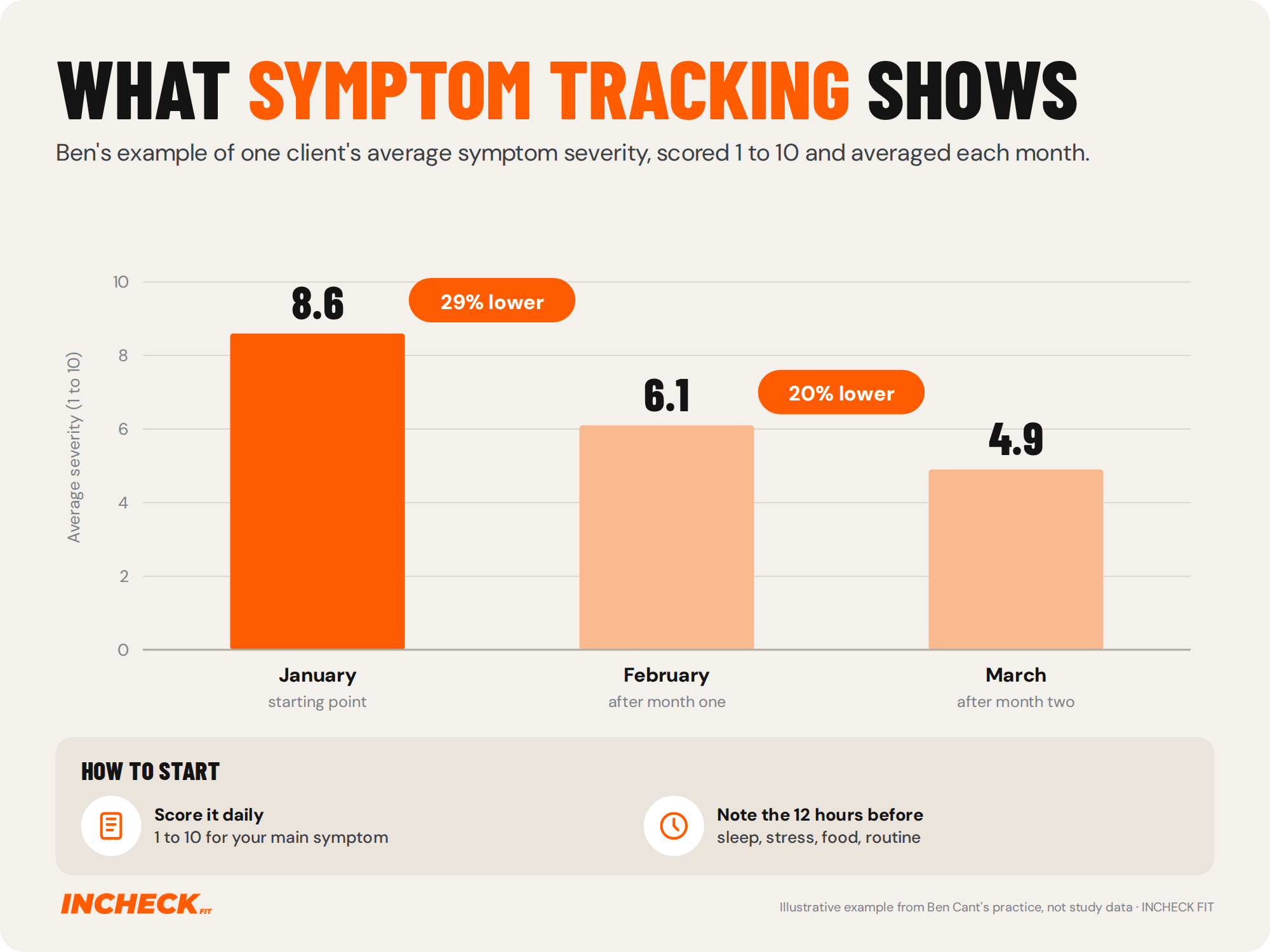
This approach transforms vague, hard-to-recall impressions into a dataset. Patterns emerge. The cause of a symptom cluster that looked like a food intolerance turns out to be a disrupted morning routine. A string of bad weekends traces back not to what was eaten but to where the person was when they needed to use the bathroom.
The takeaway: if you want to understand your gut, start tracking. A simple notes app or spreadsheet with a daily 1 to 10 symptom score alongside what happened in the preceding 12 hours will often tell you a lot within a month, and gives you and your practitioner real data to work with.
How Does Stress Affect Gut Health?
The relationship between stress and gut function is bidirectional and well-established. The gut contains roughly 500 million neurons and communicates constantly with the brain via the vagus nerve, a connection researchers refer to as the gut-brain axis.
“Stress is evidently a massive factor in gut issues,” Ben says. “So big.”
Chronic psychological stress activates the hypothalamic-pituitary-adrenal (HPA) axis, raising cortisol and affecting digestion. Blood flow is diverted away from the gut, and gut motility can slow or become erratic. Stress may also make the gut lining more permeable and change the gut microbiome, according to animal and early human research.
Ben has observed this so consistently in practice that his standard framing to clients is: resolve the stress first, then see what gut symptoms remain.
“I joke with Melbourne and Sydney clients: just move to the Gold Coast. I’ve had so many clients go on holiday and come back saying their symptoms disappeared. And I say: guess what, you don’t have a gut problem. You have a life problem.”
That said, stress is never the explanation to settle on for red-flag symptoms. See your GP promptly, whatever your stress levels, if you notice blood in your stool, unexplained weight loss, a lasting change in bowel habit, trouble swallowing, ongoing vomiting, or symptoms that wake you at night.
This is not to minimise genuine gut conditions. In Ben’s experience, chronic low-grade stress is a major driver of digestive symptoms for many people, and supplements alone will not fix that.
Why Regular Blood Work Is One of the Most Valuable Investments You Can Make
Many people only have blood tests when something already feels wrong. Ben’s position is that by that point, you are already behind.
“Blood work is one of the best tools we have for identifying things before they become problems,” he says. “A lot of very resilient people with discipline and self-control can go far in spite of poor health. The hustle is not necessarily causing it, but if you are not getting blood work done and putting symptoms aside, you may not know until you get the brick.”
The good news for Australians is that access has improved significantly. Private pathology services allow individuals to order their own comprehensive panels without a GP referral, receive results by email, and then take those results to a specialist of their choosing for interpretation. The cost is often modest, particularly when weighed against the cost of operating at suboptimal health for years.
The Difference Between “Normal” and “Optimal”
One of Ben’s most important points is that reference ranges on blood test results are not the same as optimal ranges. A reference range shows where most people in a reference group sit (usually the middle 95%), which is not necessarily the level that is best for you.
“Being in range has really not a lot to do with being optimal,” he says. “It’s becoming less and less relevant as time goes on as we become a sicker population.”
What the research says: labs build many reference ranges from carefully selected healthy people rather than everyone who walks in. Testosterone ranges, for example, were standardised using healthy, non-obese men aged 19 to 39 (Travison et al., 2017). So being in range is a reasonable sign, but where you sit, and how you feel, still matter.
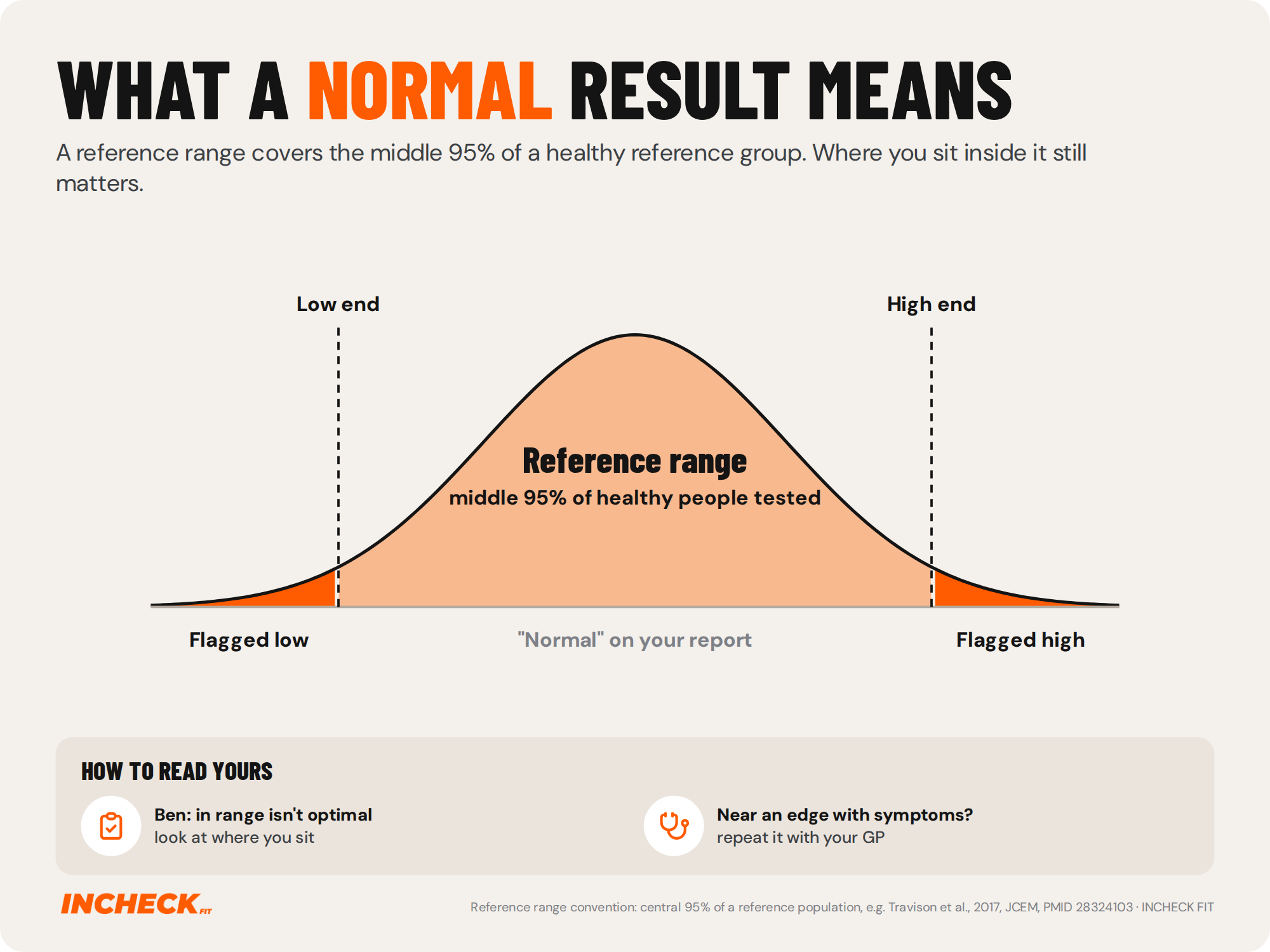
This matters practically, but it cuts both ways. A result near the edge of a range is worth discussing with your doctor if you also have symptoms, and it should usually be repeated before any decision is made. A result on its own, without symptoms, is not a reason to start treatment or supplements. A high-sensitivity CRP (C-reactive protein) in the upper part of the range can point to low-grade inflammation, but one result is easily raised by a cold or a hard training week, so it is worth repeating and interpreting with your doctor.
When reviewing your own results, ask not just whether you are within range, but where within that range you sit, and what that means for you given your symptoms.
How to Find the Right Practitioner
Ben is direct about the limitations of mainstream medicine for these conversations. In his view, GPs are trained primarily to identify and treat disease, not to optimise nutrition, micronutrient status or hormonal health.
“Doctors should be doing what doctors do: look for disease, have interventions suitable for that. But on nutrition, they’re not trained. A GP saying ‘your supplements are just expensive urine’ is showing you that anything outside their scope of practice they’re going to dismiss.”
Ben’s red flags when searching for a specialist: practitioners who avoid being interviewed or appearing in long-form content, those who make extreme one-sided claims without acknowledging opposing evidence, and anyone who cannot clearly explain their reasoning when challenged.
Many GPs do work closely with nutrition professionals. An Accredited Practising Dietitian or an endocrinologist can work alongside your GP, and if you have a chronic condition, a GP care plan can bring Medicare rebates for dietitian visits.
Fatty Fish, Omega-3 and the Rule of Seven
Omega-3 fatty acids, specifically EPA (eicosapentaenoic acid) and DHA (docosahexaenoic acid), are among the most studied nutrients in the literature. Higher omega-3 status is linked with lower heart disease risk in observational studies, although large supplement trials have given mixed results.
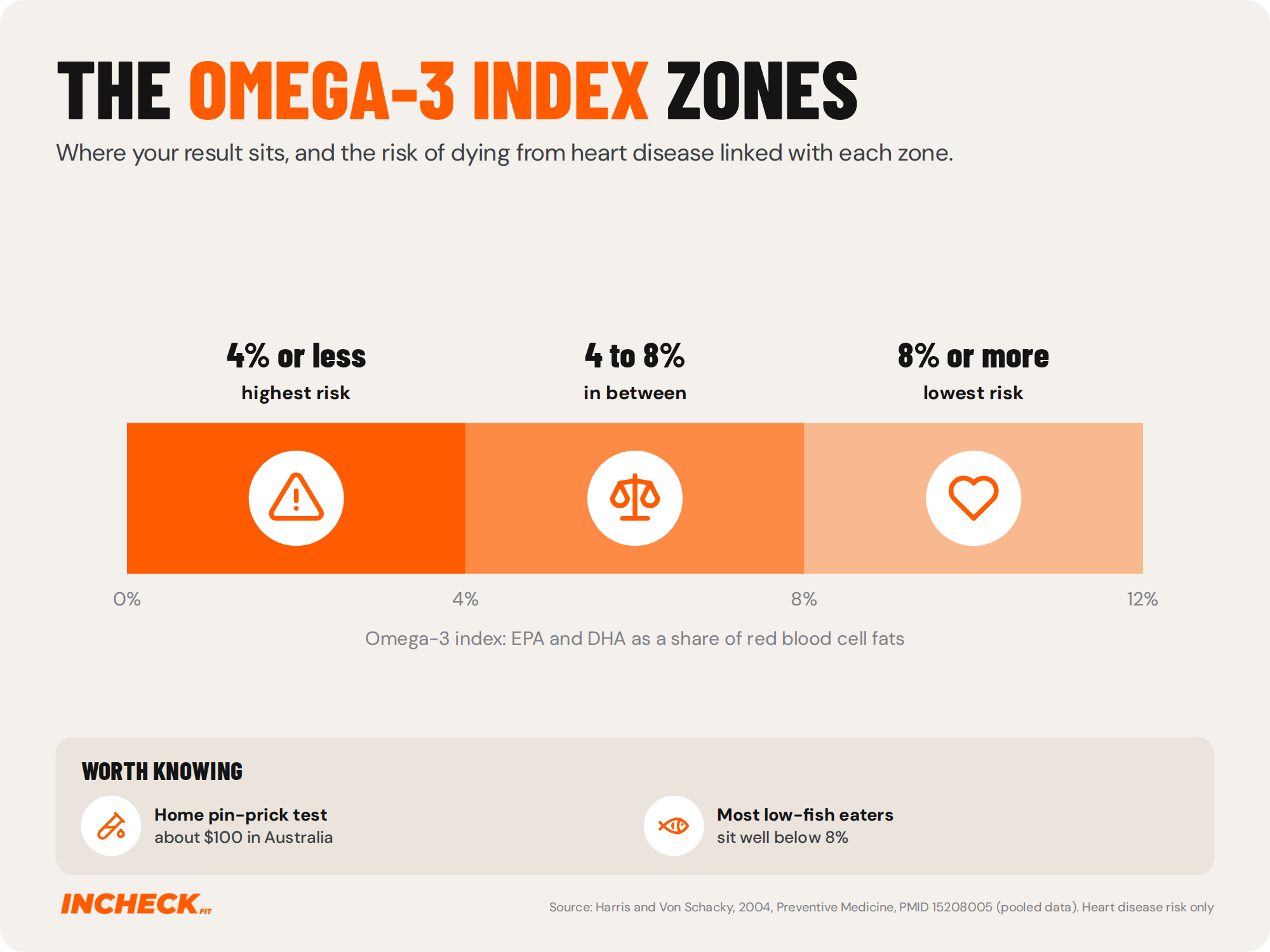
Ben uses the omega-3 index test, a simple red blood cell pin-prick test available for around $100 in Australia, to assess status objectively rather than guessing based on dietary intake.
“We know from the data that having an omega-3 index of 8% or above puts you in the lowest risk quartile for many of the things you do not want to get. Under 4% puts you in the highest risk quartile.”
Ben also points to a study of 3,458 adults who tested their own omega-3 index. Among those who ate fish three or more times a week and took an omega-3 supplement, 44% reached 8% or more, compared with 10% of those who ate fish twice a week without a supplement and 2% of those who had neither (Jackson et al., 2019).
What the research says: researchers first proposed the omega-3 index in 2004. An index of 8% or more was linked with the lowest risk of dying from heart disease, and 4% or less with the highest (Harris and Von Schacky, 2004). Those cut-offs are about heart disease specifically. In the large VITAL trial of 25,871 adults, a daily 1 g omega-3 supplement did not significantly reduce major heart attacks and strokes overall (Manson et al., 2019), so fish oil is not a guarantee. Most people who eat little fish sit well below 8%, and getting there usually takes regular oily fish, a supplement, or both.
Is Fish Oil as Good as Eating Fish?
Fish oil supplements are not identical to whole fish consumption. Fish provides selenium, iodine, vitamin D, and other co-factors not present in a capsule. For EPA and DHA delivery specifically, however, a high-quality supplement is a practical and effective option for those who do not eat fish regularly.
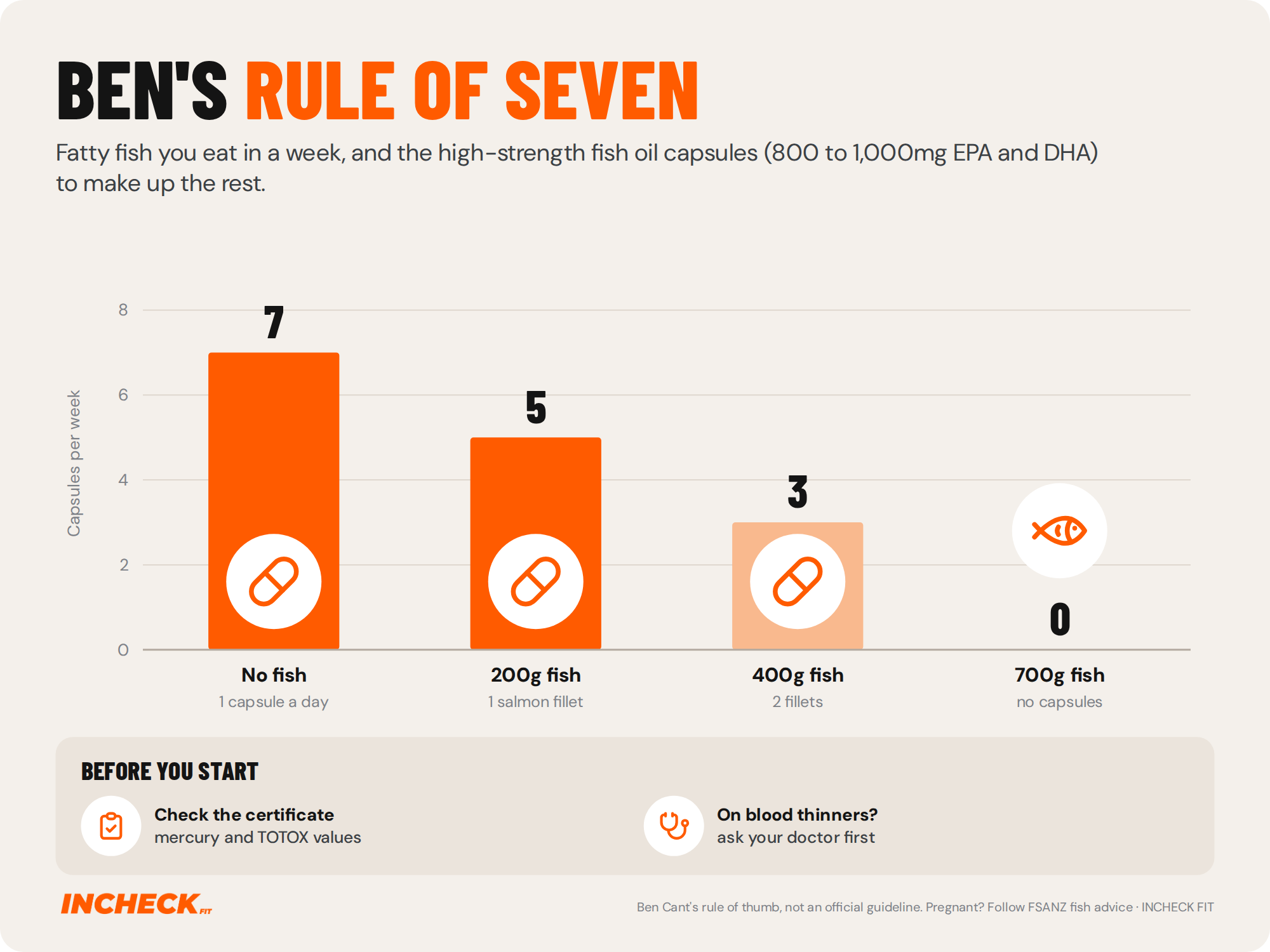
Ben’s “rule of seven”, his own rule of thumb rather than an official guideline, simplifies the approach:
- Aim for 700 grams of fatty fish per week total
- For every 100 grams below 700g, take one high-strength fish oil capsule (800 to 1,000mg EPA and DHA per capsule)
- If you eat no fish at all: seven capsules per week, or one daily
- If you eat 400g of fatty fish per week: three fish oil capsules to cover the remainder
“Clients love it because you’re putting the ownership back in their hands. I don’t care what you do, have fish or supplements. And they can adjust it as they go.”
When selecting a supplement, Ben recommends verifying the certificate of analysis for heavy metals (particularly mercury), oxidation markers (TOTOX values), and the presence of vitamin E, which stabilises the oils and reduces rancidity. On mercury specifically: for most adults eating low-mercury fish such as salmon and sardines, the benefits of regular fish outweigh the risk. If you are pregnant, planning pregnancy or feeding young children, follow Food Standards Australia New Zealand (FSANZ) advice on which fish to limit. If you take blood-thinning medication, check with your doctor before taking fish oil.
Sleep, Caffeine and the Hormonal Cascade Nobody Talks About
Poor sleep affects appetite, energy and hormones such as testosterone, and may also affect digestion. Despite being cited constantly as important, it is routinely deprioritised.
Ben describes a pattern he sees repeatedly in clients: late caffeine consumption triggering a cascading effect that compounds nightly.
“Caffeine too late in the day stops people from getting tired at night. Not being tired leads to staying up, using screens, throwing on artificial light. The artificial light suppresses melatonin. Low melatonin disrupts sleep architecture. Then you are also eating close to bed, digesting food, starting the next morning already behind.”
Each decision in that chain flows logically from the one before it. And because melatonin secretion is disrupted, sleep quality, even when hours are technically adequate, deteriorates. The consequence shows up the next day in energy, hunger signals, stress tolerance, and digestive function.
Practical priority: set a caffeine cut-off of no later than 1 to 2pm. For many people this one change helps them fall asleep sooner and sleep better, with no supplements needed.
The Role of Body Composition in Hormonal Health
The relationship between body composition, calorie intake and hormonal health runs in both directions. Good sleep, stress management and healthy hormone levels make body composition goals easier, and very aggressive diets can affect hormones, sleep and recovery.
This plays out practically in the fat loss versus muscle building conversation. For those working on body composition through nutrition, Ben favours a measured, patient approach over aggressive deficits, with the caveat that psychology matters.
“The slower you go with a caloric deficit, the lower the likelihood of hunger problems, craving problems, and gym performance impairment. But you also have a client who leaves you because you took too long.”
In practice, the best approach is the one sustainable enough to maintain. Short-term challenges and 8-to-12-week phases can be genuinely effective but only when they are followed by systems designed to maintain the result, rather than simply marking an end point and walking away.
We built INCHECK FIT around exactly this challenge. There is no meal logging, and the weekly progress review adjusts your calorie and macro targets as you progress, so the plan keeps working week to week, not just for the first eight weeks.
Frequently Asked Questions
-
How long does it take to improve gut health naturally? Some people notice changes within a few weeks once sleep, stress, hydration and routine improve. Infections or other conditions can take longer and need a practitioner. If you have red-flag symptoms such as blood in your stool or unexplained weight loss, see your GP first.
-
What are the most common causes of bloating in adults? Stress, poor sleep, disrupted bowel routine, dehydration, constipation and certain dietary intolerances are common causes. Gut infections, including Helicobacter pylori, can be overlooked. In Ben’s experience, food sensitivities, while real, are often not the primary driver, though a dietitian-led low FODMAP diet helps many people with diagnosed IBS.
-
What is the omega-3 index test and how do I do it? The omega-3 index test is a red blood cell analysis that measures the percentage of omega-3 fatty acids (EPA and DHA) in red blood cell membranes. A result of 8% or more has been linked with the lowest risk of dying from heart disease. The test is available as a home pin-prick kit in Australia for approximately $100.
-
Is fish oil a good substitute for eating fish? For EPA and DHA delivery specifically, a high-quality fish oil supplement is an effective substitute. Whole fish provides additional nutrients (selenium, iodine, vitamin D) that a supplement will not replicate. The “rule of seven” is a practical guide: aim for 700g of fatty fish per week, and for every 100g below that, take one high-strength fish oil capsule that week (so seven capsules a week, about one a day, if you eat no fish). This is Ben’s rule of thumb rather than an official guideline, so check with your doctor if you take blood-thinning medication.
-
Can stress really cause digestive problems? Yes. The gut-brain axis is a well-established bidirectional communication network. Chronic stress raises cortisol and can disrupt gut motility, and animal and early human research suggests it can also affect the gut lining and microbiome. Many people find that digestive symptoms improve substantially when stress is reduced, sometimes without any changes to diet.
-
What blood tests should I be getting regularly? Ben’s suggested annual panel includes: full blood count, thyroid function, sex hormones, metabolic markers (glucose, insulin, HbA1c), liver and kidney function, inflammation markers (CRP, homocysteine), vitamin D, zinc, ferritin, and a lipid panel. Many of these are not included in a standard GP annual check-up but can be requested or accessed through private pathology services. This is one practitioner’s approach rather than a guideline. Australian pathologists advise against routine vitamin D screening in people without risk factors (Choosing Wisely Australia), so ask your GP which tests make sense for you.
References
-
Harris WS, Von Schacky C. “The Omega-3 Index: a new risk factor for death from coronary heart disease?” Preventive Medicine. 2004;39(1):212-220. PMID: 15208005. DOI: 10.1016/j.ypmed.2004.02.030 [Pooled analysis. Abstract read on PubMed 28 Sep 2026.]
-
Manson JE, Cook NR, Lee IM, et al. “Marine n-3 fatty acids and prevention of cardiovascular disease and cancer.” New England Journal of Medicine. 2019;380(1):23-32. PMID: 30415637. DOI: 10.1056/NEJMoa1811403 [Randomised controlled trial (VITAL), n=25,871. Checked Sep 2026.]
-
Li Y, Choi H, Leung K, et al. “Global prevalence of Helicobacter pylori infection between 1980 and 2022: a systematic review and meta-analysis.” Lancet Gastroenterology and Hepatology. 2023;8(6):553-564. PMID: 37086739. DOI: 10.1016/S2468-1253(23)00070-5 [Systematic review, 224 studies, 71 countries. Abstract read on PubMed 28 Sep 2026.]
-
Dionne J, Ford AC, Yuan Y, et al. “A systematic review and meta-analysis evaluating the efficacy of a gluten-free diet and a low FODMAPs diet in treating symptoms of irritable bowel syndrome.” American Journal of Gastroenterology. 2018;113(9):1290-1300. PMID: 30046155. DOI: 10.1038/s41395-018-0195-4 [Systematic review and meta-analysis, 7 low FODMAP RCTs, n=397. Abstract read on PubMed 28 Sep 2026.]
-
Travison TG, Vesper HW, Orwoll E, et al. “Harmonized reference ranges for circulating testosterone levels in men of four cohort studies in the United States and Europe.” Journal of Clinical Endocrinology and Metabolism. 2017;102(4):1161-1173. PMID: 28324103. DOI: 10.1210/jc.2016-2935 [Reference range study. Checked Sep 2026.]
-
Food Standards Australia New Zealand. Mercury in fish. https://www.foodstandards.gov.au [Regulator advice. Checked Sep 2026.]
-
Choosing Wisely Australia, Royal College of Pathologists of Australasia recommendations. https://www.choosingwisely.org.au [Clinical recommendations. Checked Sep 2026.]
-
Expert contributor: Ben Cant. Biochemist, nutrition and strength coach. His clinical views are attributed to him throughout.
-
Jackson KH, Polreis JM, Tintle NL, et al. “Association of reported fish intake and supplementation status with the omega-3 index.” Prostaglandins, Leukotrienes and Essential Fatty Acids. 2019;142:4-10. PMID: 30773210. DOI: 10.1016/j.plefa.2019.01.002 [Two cross-sectional studies, n=28 and n=3,458. Abstract read on PubMed 29 Sep 2026.]
Last reviewed: September 2026