Many women live with symptoms like painful periods, fatigue and mood shifts that are worth investigating rather than accepting. Period pain that has been normalised. Fatigue that has been accepted. Stubborn weight that keeps getting blamed on willpower. None of these are your fault.
Balancing hormones naturally begins with recognising that what many women write off as “just how it is” (painful periods, mood shifts before menstruation, persistent energy crashes, difficulty losing weight) are signals worth investigating. The body is always communicating. The key is learning to listen.
As a personal trainer, I have sat across from countless women doing everything right by conventional standards and still not feeling or performing the way they should. The conversation I had with Chinese medicine practitioner and author Nat Kringoudis, known as the hormone revolutionist, confirmed something I had long suspected: for many women, hormones are a missing piece. In this guide, drawing on Kringoudis’s clinical insights, I break down what is happening, what your body may be telling you, and practical changes worth trying. Where her clinical views go further than research has tested, we say so, and we have added what the evidence shows alongside her advice.
Your Period Is Your Monthly Report Card
One of the most useful reframes in women’s health comes directly from Kringoudis: your period is your monthly report card.
Your menstrual cycle is not just a reproductive function. It is a vital sign, in the same way that blood pressure, resting heart rate, and sleep quality are vital signs. A regular cycle with manageable flow and pain is a good sign that you are ovulating regularly. A painful, irregular, absent, or excessively heavy cycle is your body communicating that something needs attention.
This framing matters because it shifts the response from resignation to curiosity. A check engine light does not mean your car is ruined. It means something specific needs looking at. Your cycle works the same way.
Is Period Pain Normal?
Period pain is common. But common and normal are not the same thing, and the distinction is enormously important.
“No pain is ever normal,” says Kringoudis. “It is a sign of something else. If you had pain anywhere else in your body, you would go and explore that, and period pain is no different.”
What the research says: period pain is extremely common. A review of 38 studies covering 21,573 young women found 71% had period pain, and 1 in 5 had missed school or university because of it (Armour et al., 2019). Mild cramping is usually not a cause for concern, but pain that stops you working, studying or exercising is not something to simply put up with.
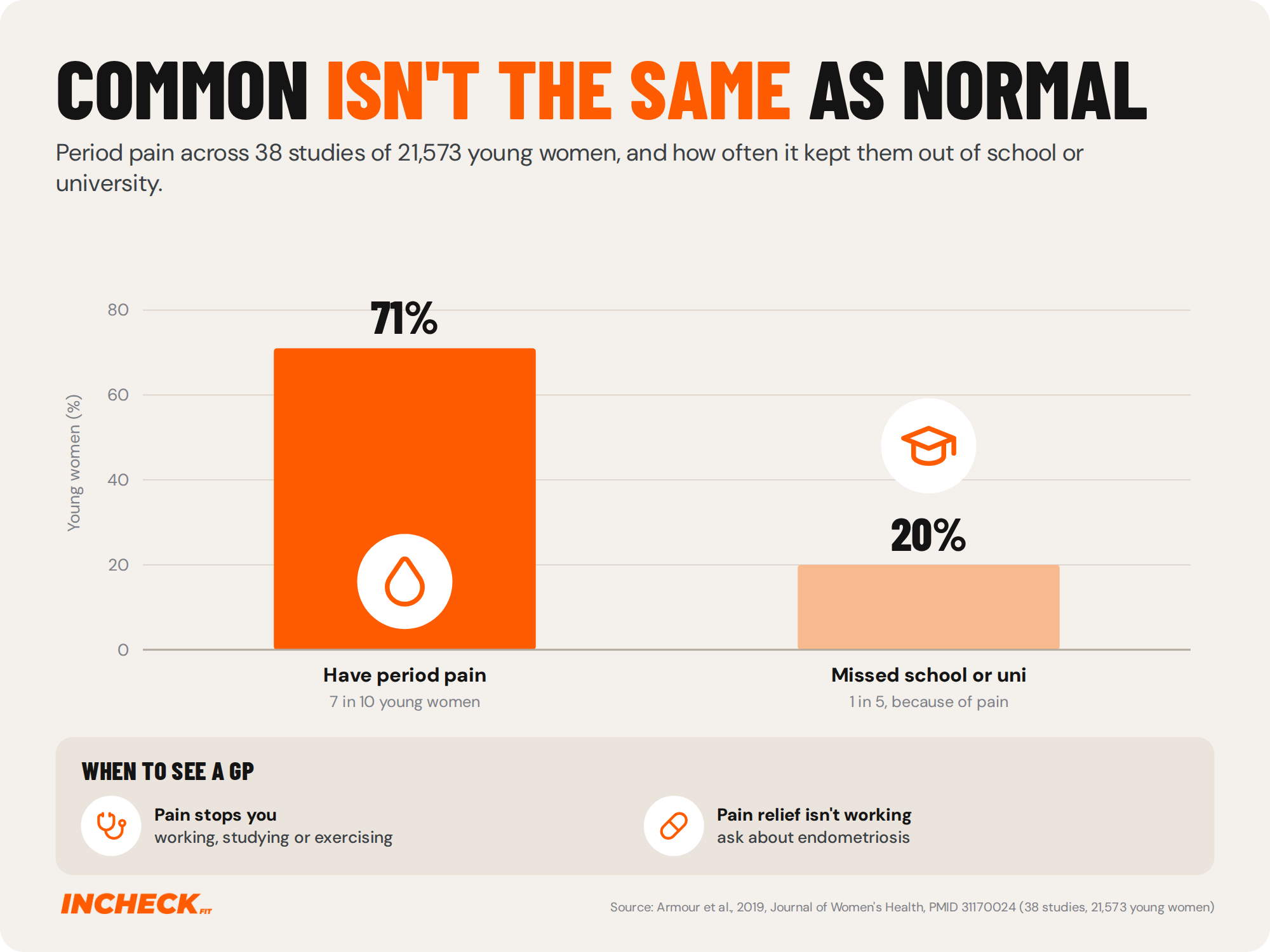
For generations, women have been told that period pain is simply part of being a woman: something to manage, not investigate. That framing has done an enormous amount of harm, because the answers do exist. Lifestyle changes such as regular exercise can help some women. But period pain that disrupts your life, or that pain relief does not control, should be assessed by a GP or gynaecologist, because conditions like endometriosis can take several years to diagnose.
Most period pain is caused by prostaglandins, chemicals that make the uterus contract. Pain can also be a sign of conditions such as endometriosis or adenomyosis. In her clinical work, Kringoudis also looks at chronic stress, food intolerances, inflammation, toxin exposure and nutritional deficiencies as contributors. But the starting point for every woman experiencing pain is the same: stop accepting it as inevitable and start asking why.
What Actually Causes Hormone Imbalance in Women?
Hormone imbalance rarely has a single cause. Kringoudis describes it using the concept of switches. When enough switches are flicked on simultaneously, the body reaches a threshold and symptoms appear. The goal is not to find one perfect answer but to identify which switches are active and start turning them off, one at a time.
In Kringoudis’s framework, the most common switches are these.
Chronic stress. In Kringoudis’s view, this is the most significant and most underestimated driver. Stress is not just feeling busy or overworked. It includes emotional strain, unresolved trauma, poor sleep, under-eating, overtraining, and the low-grade pressure of living at a pace that never fully switches off.
Nutrition. What you eat has a direct impact on how hormones are produced, transported, and cleared from the body. Kringoudis sees food intolerances as a common and overlooked trigger. She saw a patient in clinic whose severe period pain resolved almost entirely once she identified an intolerance to oats and almonds. She had been having porridge with almond milk every morning. That is one case, and there is little research linking food intolerances to period pain, so if you want to try cutting foods out, do it with a dietitian so you do not miss key nutrients.
Toxin exposure. Endocrine disruptors, chemicals that mimic or interfere with hormones, are found in some plastics, personal care products and cleaning products. Exposure is widespread, and researchers are still working out how much everyday exposure affects hormone health (Gore et al., 2015).
Sleep deprivation. Chronic poor sleep can disrupt cortisol rhythms and has been linked with irregular cycles. Kringoudis describes sleep as one of the most underestimated levers in hormone health, and one of the first things most people are willing to sacrifice.
Environmental chaos. Kringoudis also counts a cluttered or chaotic home or work environment as a switch, because in her view it keeps the nervous system in a low-grade alert state. This has not been studied as a hormone factor, but if your surroundings stress you, it is a reasonable thing to address.
How Stress Is Quietly Running Your Hormones
Stress sits at the top of almost every hormone conversation for a good biological reason: when the stress response is switched on for long periods, the brain can turn down the signals that drive ovulation.
When stress is constant (work pressure, poor sleep, relationship strain, over-exercise, or simply never switching off), the reproductive system can take a back seat. From an evolutionary standpoint, this is logical: a stressed body reads its environment as unsafe for reproduction. The result can be irregular cycles, lower progesterone, and symptoms most women never connect to their stress levels.
The deeper problem is that we have become very good at being unconsciously stressed. “We just autopilot,” says Kringoudis. “We wake up and we are on all day, and we think that is a measure of success. But your body is keeping score.”
Kringoudis often sees what she calls the holiday effect: women who struggle with painful or irregular periods report that their cycle is fine on holiday. The environment changes, stress drops, and the body responds. In her view, this shows the capacity for better hormone health is already there. The question is how to recreate those conditions in everyday life.
Practically, this means building deliberate recovery into your routine: winding down properly before bed, giving yourself permission to do less in the days before your period, and resisting the cultural narrative that pushing harder is always the right answer. As Kringoudis puts it, the goal is to work smarter, not harder, and to do the least amount possible to be the most productive. That is not a compromise. That is a strategy.
Your Menstrual Cycle and Exercise: How to Train With Your Biology
Women’s bodies operate on a monthly hormonal cycle. Kringoudis argues that most training programmes, work schedules and daily routines are built around a 24-hour model, closer to how men’s hormones work than women’s.
The result is that most women train and live as though their bodies are identical every day of the month. They are not.
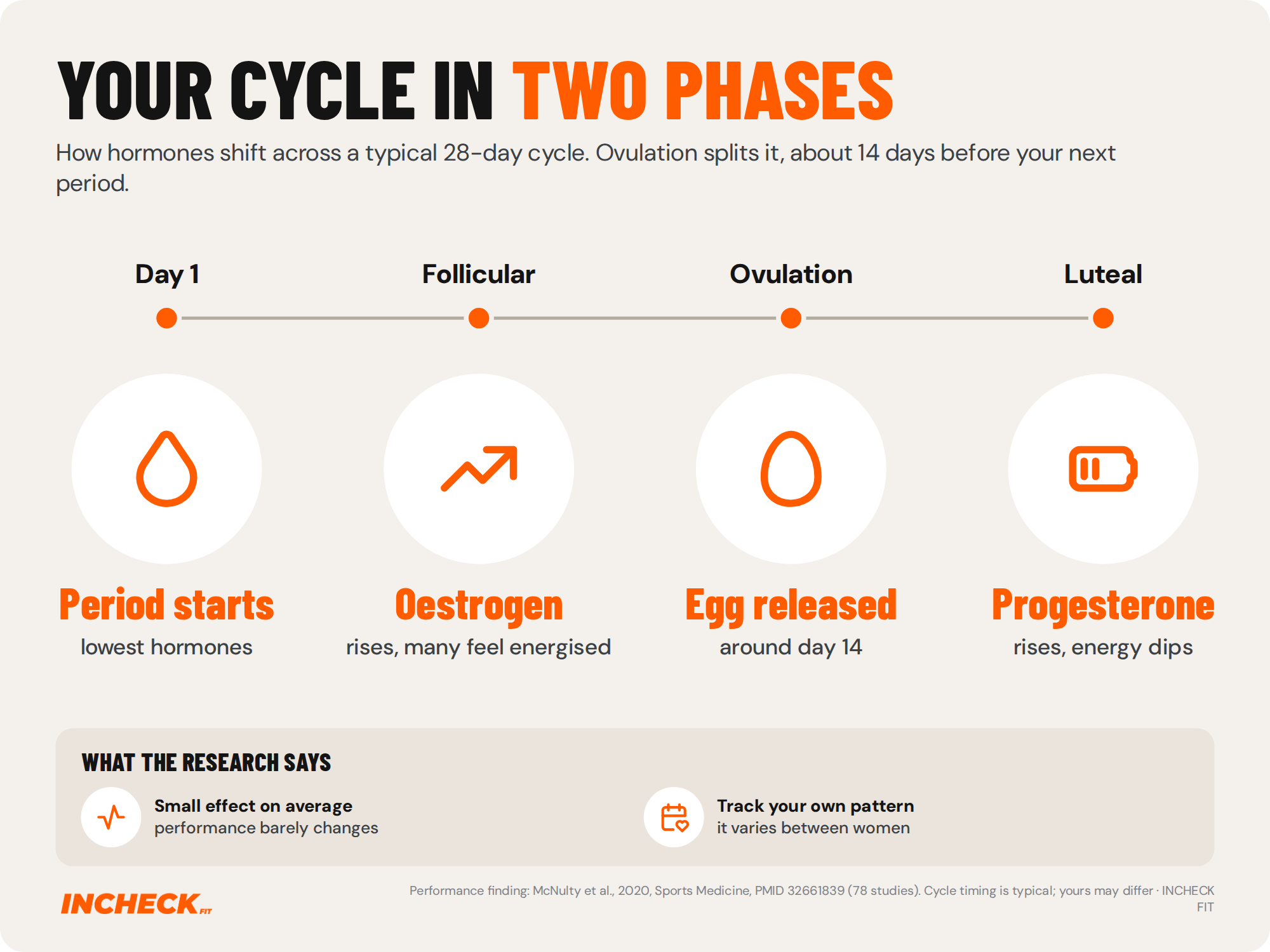
The menstrual cycle has two main phases, split by ovulation. During the follicular phase (from menstruation to ovulation), oestrogen rises and many women notice more energy and better recovery. During the luteal phase (from ovulation to the next period), progesterone rises, and many women feel flatter and want more recovery.
What the research says: a review of 78 studies found performance was at most trivially lower in the early follicular phase, and the effect varied a lot between women, so the authors recommended an individual approach rather than fixed rules for each phase (McNulty et al., 2020). That is the case for tracking: it shows you your own pattern.
“We go about our lives as if we are men because we live in that world,” says Kringoudis. “But we need to lean into our bodies as females and stop pushing against our biology.”
Tracking your cycle is the foundational first step. Once you know where you are in your month, you can begin aligning your training load, your creative output, and your recovery accordingly. Kringoudis notes that even understanding this one thing, where you are and what your body needs at that point, can be enough to shift a woman’s entire relationship with her health, her productivity, and her sense of self.
And if you have ever felt like you are falling off the bandwagon the week before your period: you are not. For many women, this is a genuine response to hormonal change. The framing Kringoudis offers is worth sitting with: what if falling off the bandwagon was actually just your monthly reset?
What You Need to Know About Birth Control and Hormones
The conversation around birth control and hormone health is nuanced, and it is one Kringoudis believes is not happening nearly enough, particularly for teenagers and women in their twenties.
The oral contraceptive pill is one of the most commonly prescribed treatments for period pain, irregular cycles, and other hormonal symptoms. While it may be appropriate for some women in some circumstances, prescribing it without investigating the root cause of those symptoms is, in Kringoudis’s view, a significant missed opportunity.
Two things are worth understanding clearly.
The combined pill prevents ovulation. Without ovulation, there is no true period. The monthly bleed on the pill is a withdrawal bleed, the result of a week off the hormones, not a real menstrual cycle. For some women the pill manages symptoms without addressing the cause, and when it stops, symptoms it was masking may return. For conditions like endometriosis, though, it is a recognised treatment.
The pill can have broader effects. Psychologist Dr Sarah Hill, author of Your Brain on Birth Control, argues the pill can affect mood and how the brain works, because hormones influence brain function. Some of this research is still debated. Kringoudis is also concerned that starting the pill in the teenage years, before hormonal development is complete (she puts this at around 21), may interrupt normal development, and she notes that research suggests later starts are less disruptive.
What the research says: there is no agreed “maturity age” of 21, but a Danish study of more than one million women found the link between hormonal contraception and starting antidepressants was strongest in teenagers (Skovlund et al., 2016). It was observational, so it does not prove the pill caused it, but it is worth discussing with your doctor.
None of this is an argument against birth control in every situation. It is an argument for having a fuller conversation before starting it, and for asking what is actually driving the symptoms that led to the prescription in the first place.
The Nutrition Connection: How to Balance Hormones Through Food
Nutrition is one of the most accessible levers available for hormone health. Two principles from Kringoudis deserve particular attention.
Eat Fibre Before Your Main Meals
The approach popularised by biochemist Jessie Inchauspé, eating fibre before the main part of a meal, is simple to try: a handful of berries, raw vegetables, an apple or a small salad before the rest of the meal. Small studies, mostly in people with type 2 diabetes, show that eating vegetables and protein before carbohydrates lowers the blood sugar rise after a meal (Shukla et al., 2015).
Why does this matter for hormones? Steadier blood sugar supports steadier energy, and it matters most for women with insulin resistance or PCOS. Kringoudis also links blood sugar spikes to inflammation, which she sees as a driver of hormone imbalance.
Kringoudis has applied this principle in clinic for several years, and says her patients often report better sleep, better periods, improved digestion and more stable energy, though this has not been tested in trials. Women with PCOS or insulin resistance may benefit most, because insulin resistance is a core feature of PCOS.
The 3pm energy crash, that near-irresistible urge to reach for something sweet in the afternoon, is something many people notice. Some find that adding fibre and protein to lunch helps.
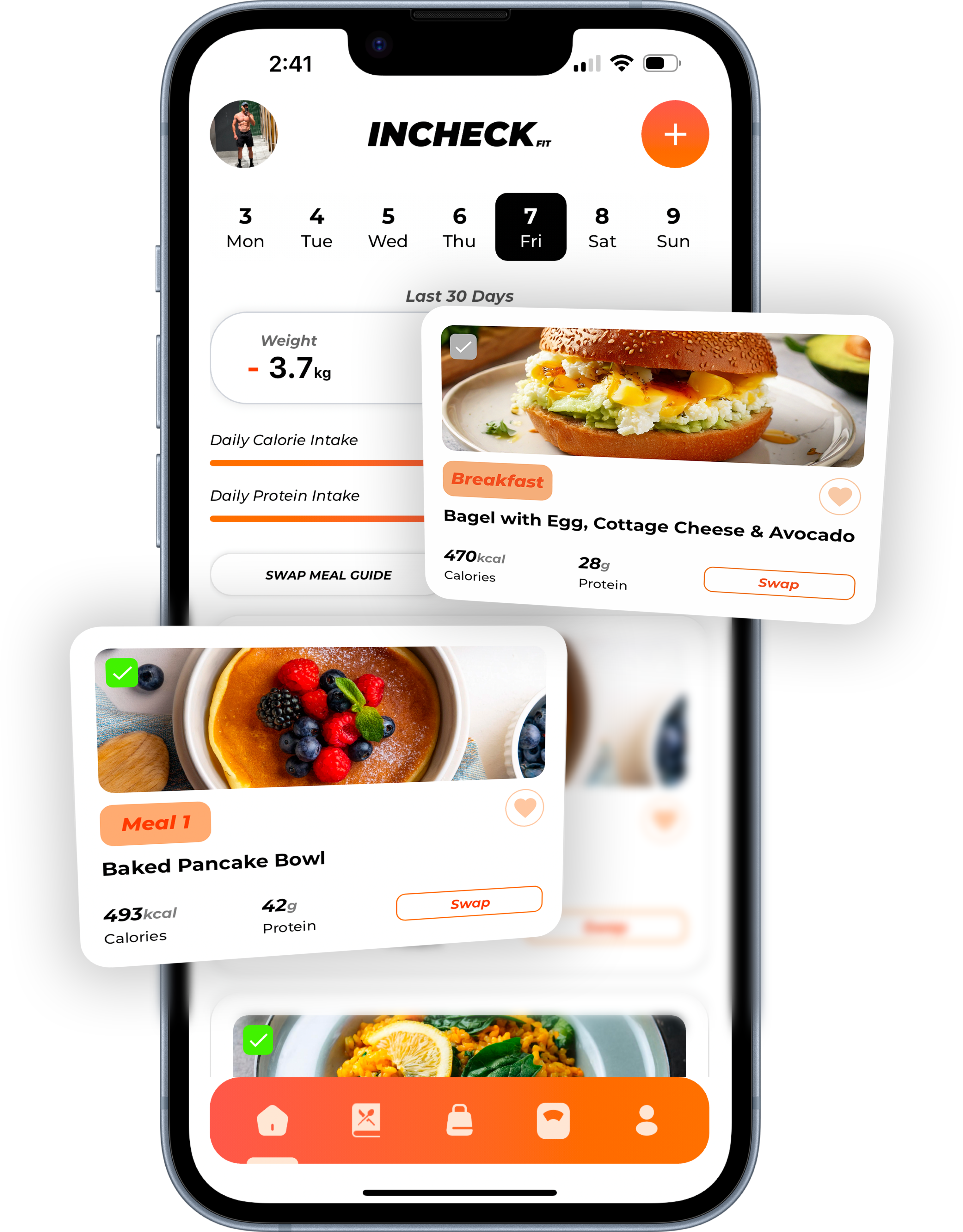
We built INCHECK FIT to make this kind of structure easy: a weekly meal plan built to your calorie and macro targets, drawing on 500+ recipes, with no meal logging. Vegetables and protein at every meal are planned for you rather than something to remember.
Prioritise Protein at Every Meal
Some hormones are built from amino acids in protein, and sex hormones are made from cholesterol, which the body makes itself. Eating enough protein, and enough energy overall, supports normal hormone production.
Getting protein right, at every meal and in amounts that suit your body weight, activity and goals, is a simple change that also helps with fullness and keeping muscle, especially in a fat loss phase. We built INCHECK FIT’s meal plans to hit your protein target across your meals, so you do not have to work it out yourself.
Oestrogen Dominance: What the Term Means and What the Evidence Says
Kringoudis estimates that around 90 per cent of her female patients present with some degree of what she calls oestrogen dominance: a state in which oestrogen is elevated relative to other hormones, particularly progesterone.
What the research says: her clinic sees women who already have hormone concerns, so this is her clinical impression, not a measured rate for women in general. Oestrogen dominance is a term used mainly in naturopathic and integrative practice. It is not a recognised medical diagnosis with agreed tests.
The signs Kringoudis sees most are heavy or painful periods, pain at ovulation (around day 14 in a 28-day cycle), mood changes in the week before menstruation, difficulty losing weight around the hips and thighs, and breast tenderness. These symptoms have many possible causes. Heavy bleeding in particular can come from fibroids, polyps, thyroid problems or bleeding disorders, so it is worth checking with your GP, who may test your iron and thyroid levels. Mid-cycle pain is common and usually harmless.
Kringoudis links this to environmental sources of oestrogen that stack up across the day: alcohol, plastics (particularly when heated), conventional personal care and cleaning products, and large amounts of soy.
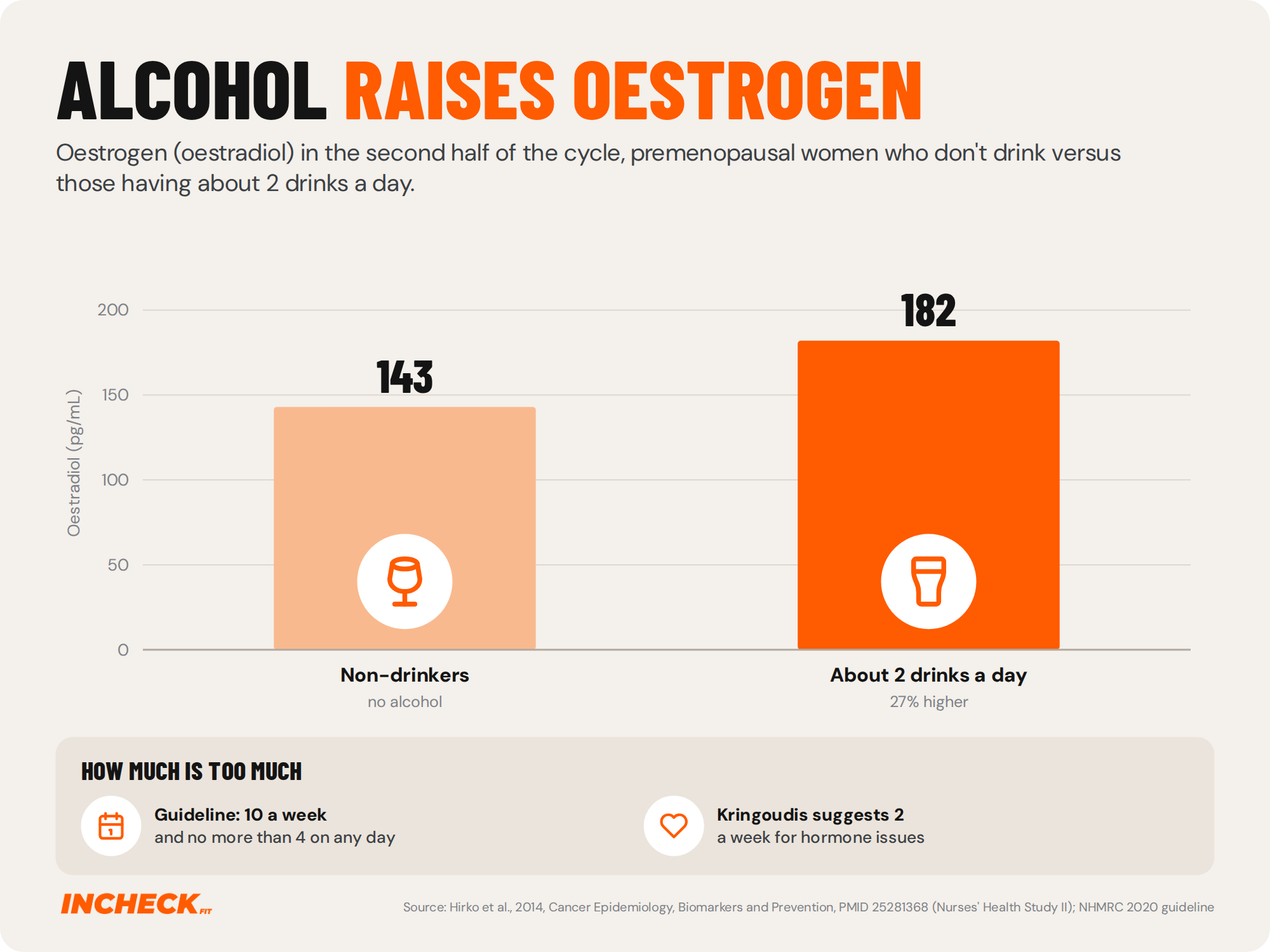
What the research says: alcohol is not an oestrogen mimic, but drinking does raise oestrogen levels. In one study of premenopausal women, those drinking about two standard drinks a day had around 27% higher oestradiol in the second half of their cycle than non-drinkers (Hirko et al., 2014). Some plastics and product ingredients are recognised endocrine disruptors (Gore et al., 2015). Soy is more reassuring: a review of 47 studies found soy did not change oestradiol levels in premenopausal women (Hooper et al., 2009).
The body clears oestrogen partly through the gut, and fibre helps it leave rather than be reabsorbed. Higher fibre intake is linked with lower oestrogen levels (Gaskins et al., 2009). Kringoudis finds increasing fibre helps women with heavy periods or strong premenstrual symptoms, though that has not been tested in trials. The same study linked very high fibre intakes with more cycles without ovulation, so more is not always better.
Kringoudis also recommends filtering drinking water, moderating alcohol, and gradually switching to cleaner personal care and household cleaning products. On water, the evidence is reassuring: a 2011 review found the contraceptive pill is not a significant contributor to oestrogen-like activity in drinking water (Wise et al., 2011).
Your Thyroid Could Be the Missing Piece
Thyroid hormone acts on almost every tissue in the body, which is why thyroid problems, even mild ones, can cause such varied symptoms: fatigue, weight gain or loss, constipation, dry skin and hair, insomnia, heavy periods, headaches, poor concentration, and more.
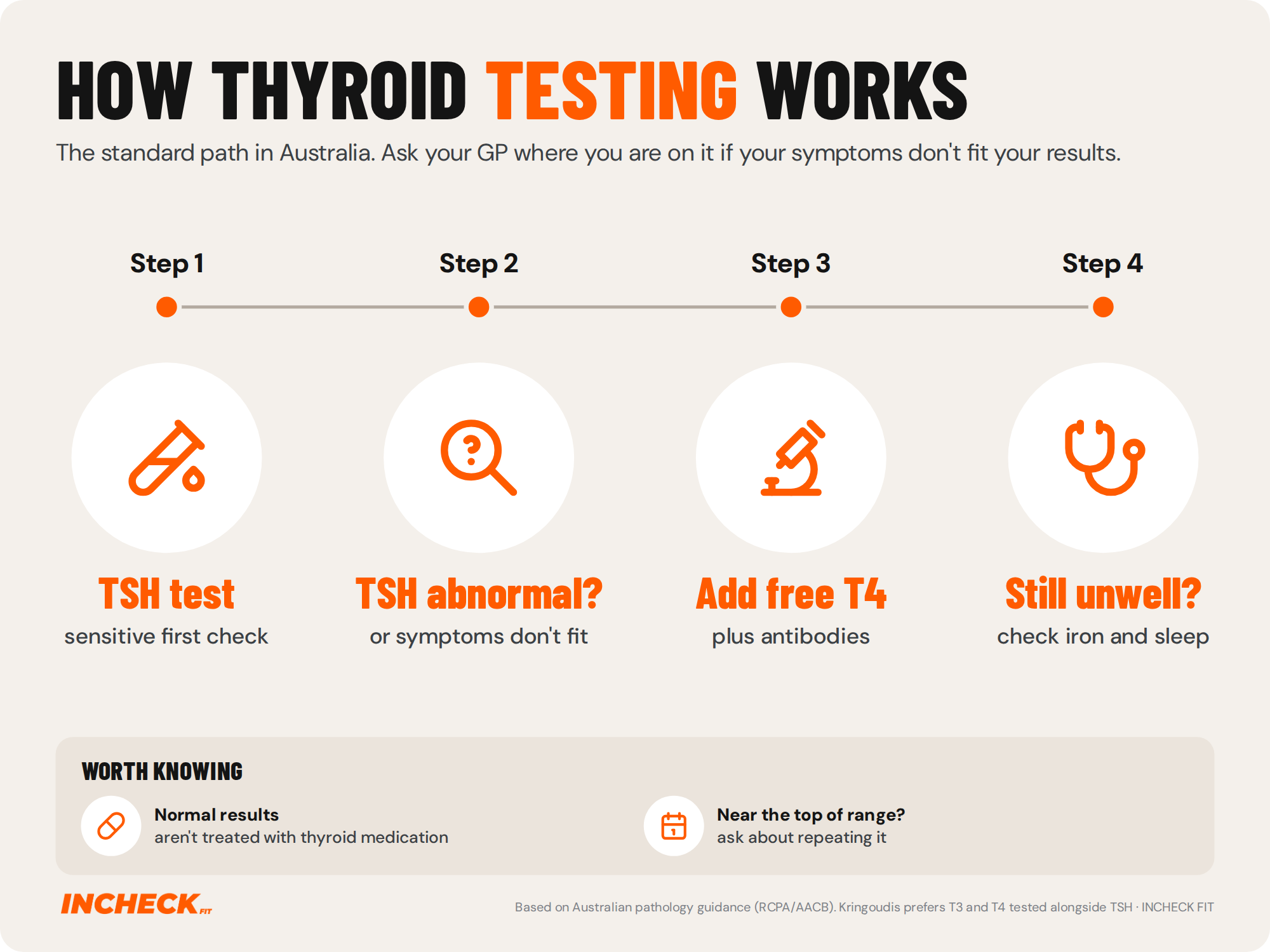
A GP will typically order a TSH (thyroid stimulating hormone) test. TSH does not measure what the thyroid is producing; it measures how hard the pituitary gland is working to prompt a thyroid response. Kringoudis believes this makes standard testing incomplete, and that T3 and T4 should be tested too.
What the research says: TSH is the recommended first check because it is very sensitive to changes in thyroid function. If TSH is abnormal, or your symptoms do not fit, your GP may add free T4 and thyroid antibodies. T3 is rarely useful when checking for an underactive thyroid.
Kringoudis also points to the reference range. TSH ranges vary by laboratory, and many use roughly 0.5 to 5.0, while functional medicine practitioners consider 0.5 to 3.0 optimal. In her experience, the closer to 1.0 a patient’s TSH, the better they feel.
What the research says: where the upper limit of normal TSH should sit is still debated, and a narrower range has not been widely adopted (Laurberg et al., 2011). TSH also rises naturally with age. If your result is near the top of the range and you have symptoms, ask your GP about repeating it.
Kringoudis sees stress as a common driver of thyroid problems that are not autoimmune. The better-established non-autoimmune causes are iodine deficiency, thyroiditis, some medications and past thyroid treatment, so managing stress, sleep and nutrition is worthwhile but no substitute for proper testing and treatment.
If your thyroid test has come back normal but you have a cluster of the symptoms above, talk to your GP about whether further tests such as free T4 and antibodies make sense, and about other causes, such as low iron, sleep problems or depression. Treating normal thyroid results with thyroid medication is not recommended, because too much thyroid hormone carries its own risks.
The Everyday Toxins Disrupting Your Hormones
The concept of endocrine disruptors sounds alarming. The practical response, however, does not require overhauling your entire household overnight.
Kringoudis recommends a straightforward approach she uses with her own patients: as each product in your home runs out, replace it with a cleaner alternative. This makes the transition gradual, manageable, and affordable rather than overwhelming.
Cleaning products are, in Kringoudis’s view, among the most significant sources of hormone-disrupting chemicals in the average home. She is direct about this: cleaning your shower with conventional bleach-based products means those chemicals are being absorbed through your skin and entering your bloodstream. Low-toxicity alternatives are now widely available.
What the research says: bleach’s main risks are breathing and skin irritation, and it is not an established hormone disruptor. Some cleaning and fragrance products contain chemicals such as phthalates that are studied as endocrine disruptors, so fragrance-free products are a sensible place to start if you want to cut exposure.
Personal care products (shampoo, conditioner, body lotion, deodorant) are applied directly to the skin, which absorbs some ingredients, depending on the chemical. Checking products against an ingredient-rating app before purchasing is a useful habit. Kringoudis recommends searching for a “clean rating” style app that scores products on ingredient safety, noting that brand names and ingredient lists change frequently enough that an app tends to stay more current than manual research.
Plastics deserve particular attention. Avoid heating food in plastic containers and consider switching from plastic to glass water bottles where possible. Some can linings contain BPA, so if you eat a lot of canned food such as tuna, glass jars or fresh options are an easy swap.
Filtered water is a change Kringoudis prioritises for women working on hormone balance, oestrogen dominance or fertility, and a bench-top jug filter is an affordable start.
What the research says: Australian tap water is treated to strict national guidelines, and the pill is not a significant source of oestrogen in drinking water (Wise et al., 2011). A filter can improve taste, but there is little evidence it changes hormone levels.
Seven Practical Switches to Start Balancing Your Hormones Today
You do not have to change everything at once. Start with one. Then add another. Progress compounds.
-
Track your menstrual cycle. If you do not know where you are in your cycle, you cannot respond intelligently to what your body needs. A tracking app is enough to get started, and the information it gives you will change how you understand your energy, mood, and physical capacity across the month.
-
Eat fibre before your main meals. A handful of berries, raw vegetables or an apple before lunch and dinner. Small studies show eating vegetables and protein first lowers the blood sugar rise after a meal, and it is one of the lowest-effort changes on this list.
-
Increase your protein intake. Many women do well by spreading protein across the day rather than having most of it at dinner. Aim to include a quality protein source at every meal (meat, fish, eggs, legumes or quality dairy) in amounts appropriate to your body weight and activity.
-
Filter your water. Kringoudis recommends a bench-top jug filter. The evidence that filters change hormone levels is thin, so treat this one as optional.
-
Reduce alcohol, particularly if your periods are heavy. Regular drinking raises oestrogen levels. Australian guidelines recommend healthy adults have no more than 10 standard drinks a week and no more than 4 on any day (NHMRC, 2020). Kringoudis suggests women working on hormone issues aim for much less, around two drinks a week.
-
Swap conventional products as they run out. Start with cleaning products, then personal care. No urgency required: just make the better choice each time something needs replacing. Over six months, this gradually reduces your endocrine disruptor load without any dramatic overhaul.
-
Prioritise sleep. Chronically poor sleep is itself a hormone disruptor. If winding down is difficult, start with one change: phone off an hour before bed. As Kringoudis put it to one of her patients: try it, and see if you actually achieve less. The bet is you achieve more.
Frequently Asked Questions
-
Is period pain normal? Period pain is very common, affecting around 7 in 10 young women. Mild cramping is usually nothing to worry about, but in Kringoudis’s view no pain should be ignored. Most period pain is caused by prostaglandins, chemicals that make the uterus contract, and it can also be a sign of conditions such as endometriosis or adenomyosis. If your period pain disrupts your life or pain relief does not control it, see a GP or gynaecologist, as conditions like endometriosis can take several years to diagnose.
-
What are the most common signs of hormone imbalance in women? Signs worth paying attention to include painful or heavy periods, persistent fatigue, difficulty losing weight, mood changes in the week before menstruation, skin and hair changes, irregular cycles and poor sleep. Thyroid hormone acts on almost every tissue, so thyroid problems can cause an especially wide range of symptoms. Many of these signs have several possible causes, so your GP is a good first stop.
-
Does stress really affect your menstrual cycle? Yes. Chronic stress can suppress the brain signals that drive ovulation, which can lead to irregular cycles and lower progesterone. Kringoudis often sees what she calls the holiday effect, where women report their cycle improves on holiday when stress drops.
-
Can nutrition actually change your hormone balance? Yes. Some hormones are built from amino acids in protein and sex hormones are made from cholesterol, so eating enough protein and enough energy overall supports normal hormone production. Fibre helps the body clear oestrogen through the gut, and blood sugar stability matters, particularly for women with insulin resistance or PCOS. Small studies show eating vegetables and protein before carbohydrates lowers the blood sugar rise after a meal.
-
What should I know before starting or stopping the pill? The most important thing to understand is that the combined pill prevents ovulation. The monthly bleed on the pill is a withdrawal bleed, not a true period. If you are taking it to manage symptoms such as period pain or irregular cycles, those symptoms may return when you stop. Before starting, it is worth asking what is driving those symptoms and whether other approaches have been explored. If you are thinking of stopping the pill, talk to your GP first, and use another form of contraception if you do not want to fall pregnant.
-
How do I know if I have oestrogen dominance? Oestrogen dominance is not a recognised medical diagnosis, so there is no agreed test. Kringoudis sees heavy menstrual bleeding and ovulation pain (mid-cycle, around day 14 in a 28-day cycle) as the most consistent signs, along with significant PMS, mood changes in the week before your period and breast tenderness. These symptoms have many possible causes, so see your GP, particularly for heavy bleeding. A progesterone blood test about seven days before your period is due can show whether you ovulated that cycle.
-
How long does it take to balance hormones naturally? It varies. Changes to diet, sleep and stress can take a few cycles to show, so give any change at least two or three months before judging it. If symptoms do not improve, or are severe, see your GP.
The Bottom Line
Hormone health is not a niche concern reserved for women who are planning a pregnancy. It is foundational to how you feel, how your body performs, how you manage your weight, and how well you recover from the demands of everyday life.
The encouraging truth, as Nat Kringoudis makes clear, is that many hormone-related symptoms can be understood and improved, often with a mix of lifestyle changes and medical care. Your body is not broken. It is communicating. The work is learning to read those signals and responding with the lifestyle, nutrition, and environmental changes that give your hormones the conditions they need to function properly.
Start with one thing. Do it consistently. Then ask what the next step is.
References
-
Armour M, Parry K, Manohar N, et al. “The prevalence and academic impact of dysmenorrhea in 21,573 young women: a systematic review and meta-analysis.” Journal of Women’s Health. 2019;28(8):1161-1171. PMID: 31170024. DOI: 10.1089/jwh.2018.7615 [Systematic review and meta-analysis, 38 studies. Abstract read on PubMed 28 Sep 2026.]
-
Gore AC, Chappell VA, Fenton SE, et al. “EDC-2: The Endocrine Society’s second scientific statement on endocrine-disrupting chemicals.” Endocrine Reviews. 2015;36(6):E1-E150. PMID: 26544531. DOI: 10.1210/er.2015-1010 [Scientific statement. Checked Sep 2026.]
-
McNulty KL, Elliott-Sale KJ, Dolan E, et al. “The effects of menstrual cycle phase on exercise performance in eumenorrheic women: a systematic review and meta-analysis.” Sports Medicine. 2020;50(10):1813-1827. PMID: 32661839. DOI: 10.1007/s40279-020-01319-3 [Systematic review and meta-analysis, 78 studies. Checked Sep 2026.]
-
Skovlund CW, Morch LS, Kessing LV, Lidegaard O. “Association of hormonal contraception with depression.” JAMA Psychiatry. 2016;73(11):1154-1162. PMID: 27680324. DOI: 10.1001/jamapsychiatry.2016.2387 [Prospective cohort, n=1,061,997 Danish women. Abstract read on PubMed 28 Sep 2026.]
-
Shukla AP, Iliescu RG, Thomas CE, Aronne LJ. “Food order has a significant impact on postprandial glucose and insulin levels.” Diabetes Care. 2015;38(7):e98-e99. PMID: 26106234. DOI: 10.2337/dc15-0429 [Small crossover study, adults with type 2 diabetes. Checked Sep 2026.]
-
Hirko KA, Spiegelman D, Willett WC, et al. “Alcohol consumption in relation to plasma sex hormones, prolactin, and sex hormone-binding globulin in premenopausal women.” Cancer Epidemiology, Biomarkers and Prevention. 2014;23(12):2943-2953. PMID: 25281368. DOI: 10.1158/1055-9965.EPI-14-0982 [Cross-sectional analysis, Nurses’ Health Study II. Abstract read on PubMed 28 Sep 2026.]
-
Hooper L, Ryder JJ, Kurzer MS, et al. “Effects of soy protein and isoflavones on circulating hormone concentrations in pre- and post-menopausal women: a systematic review and meta-analysis.” Human Reproduction Update. 2009;15(4):423-440. PMID: 19299447. DOI: 10.1093/humupd/dmp010 [Systematic review and meta-analysis, 47 studies. Abstract read on PubMed 28 Sep 2026.]
-
Gaskins AJ, Mumford SL, Zhang C, et al. “Effect of daily fiber intake on reproductive function: the BioCycle Study.” American Journal of Clinical Nutrition. 2009;90(4):1061-1069. PMID: 19692496. DOI: 10.3945/ajcn.2009.27990 [Prospective cohort, n=250 women aged 18-44. Checked Sep 2026.]
-
Wise A, O’Brien K, Woodruff T. “Are oral contraceptives a significant contributor to the estrogenicity of drinking water?” Environmental Science and Technology. 2011;45(1):51-60. PMID: 20977246. DOI: 10.1021/es1014482 [Review. Checked Sep 2026.]
-
Laurberg P, Andersen S, Carle A, et al. “The TSH upper reference limit: where are we at?” Nature Reviews Endocrinology. 2011;7(4):232-239. PMID: 21301488. DOI: 10.1038/nrendo.2011.13 [Review. Checked Sep 2026.]
-
National Health and Medical Research Council. Australian Guidelines to Reduce Health Risks from Drinking Alcohol. 2020. https://www.nhmrc.gov.au/health-advice/alcohol [National guideline. Checked Sep 2026.]
Last reviewed: September 2026 by the INCHECK FIT nutrition team.
Last reviewed: September 2026