
Keto has a reputation for melting fat faster than any other approach. People drop weight in week one, feel less hungry, and assume something metabolically special is happening. The internet is full of claims that ketosis unlocks a hidden fat-burning mode that other diets simply cannot match.
Here is the short answer, backed by the best-controlled research we have: yes, keto does increase fat burning, but fat burning and fat loss are not the same thing. This distinction is critical, and most keto content glosses over it entirely. This article walks through exactly what is happening when you eat a high-fat diet, what gluconeogenesis has to do with it, what the controlled studies show, and what actually drives fat loss.
Fat Burning and Fat Loss Are Not the Same Thing
This is the most important concept in understanding keto’s real effect on the body, and the one most often left out of the conversation.
Fat burning, in scientific terms, refers to fat oxidation: the rate at which your body uses fat as a fuel source. A ketogenic diet measurably increases fat oxidation. That is a genuine, documented physiological response. In the absence of dietary carbohydrates, the liver converts fatty acids into ketone bodies that the brain and body run on, and fat becomes the dominant fuel.
Fat loss is something different. Fat loss refers to a reduction in the fat stored in your adipose tissue, which is what most people mean when they say they want to “lose fat.” This requires your body to burn more total energy than you consume over time.
You can have a high rate of fat oxidation without losing body fat. You can lose body fat with a relatively low rate of fat oxidation. The two are related, but they are not the same lever. Pulling one does not automatically pull the other.
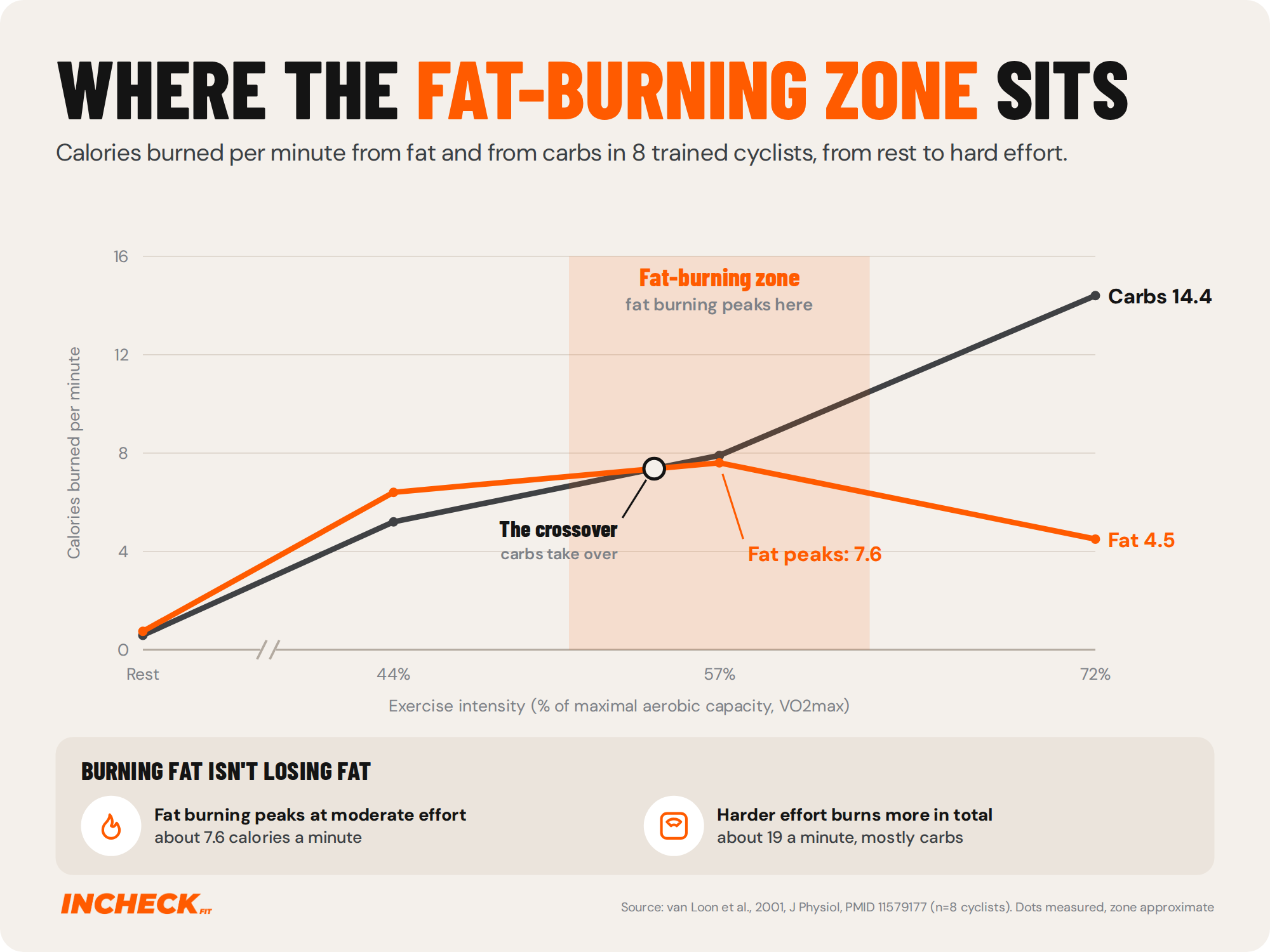
The “Fat-Burning Zone” Works the Same Way
Exercise has its own version of this idea. In a 2002 study of 18 trained cyclists, fat burning peaked at about 64% of maximal effort and fell to almost nothing above about 89% (Achten et al., 2002). That “zone” is real, but it describes the fuel mix, not fat loss. In a 2001 study of 8 cyclists, moderate effort burned the most fat per minute, yet hard effort burned more calories in total, with carbohydrate making up the difference (van Loon et al., 2001). Fat loss still comes down to burning more energy than you eat over time, not which fuel you use during the session.
When You Eat More Fat, You Burn More Dietary Fat, Not More Body Fat
This is the part the keto community rarely says plainly: on a high-fat diet, your body burns more fat for fuel, but that fat is overwhelmingly the fat you just ate, not the fat stored on your body.
Your body is adaptive. It uses what you give it. Feed it mostly fat, and it will oxidise mostly fat. Feed it mostly carbohydrates, and it will oxidise mostly carbohydrates. This is not a fat-loss advantage. It is simply your metabolism matching its fuel source to your diet.
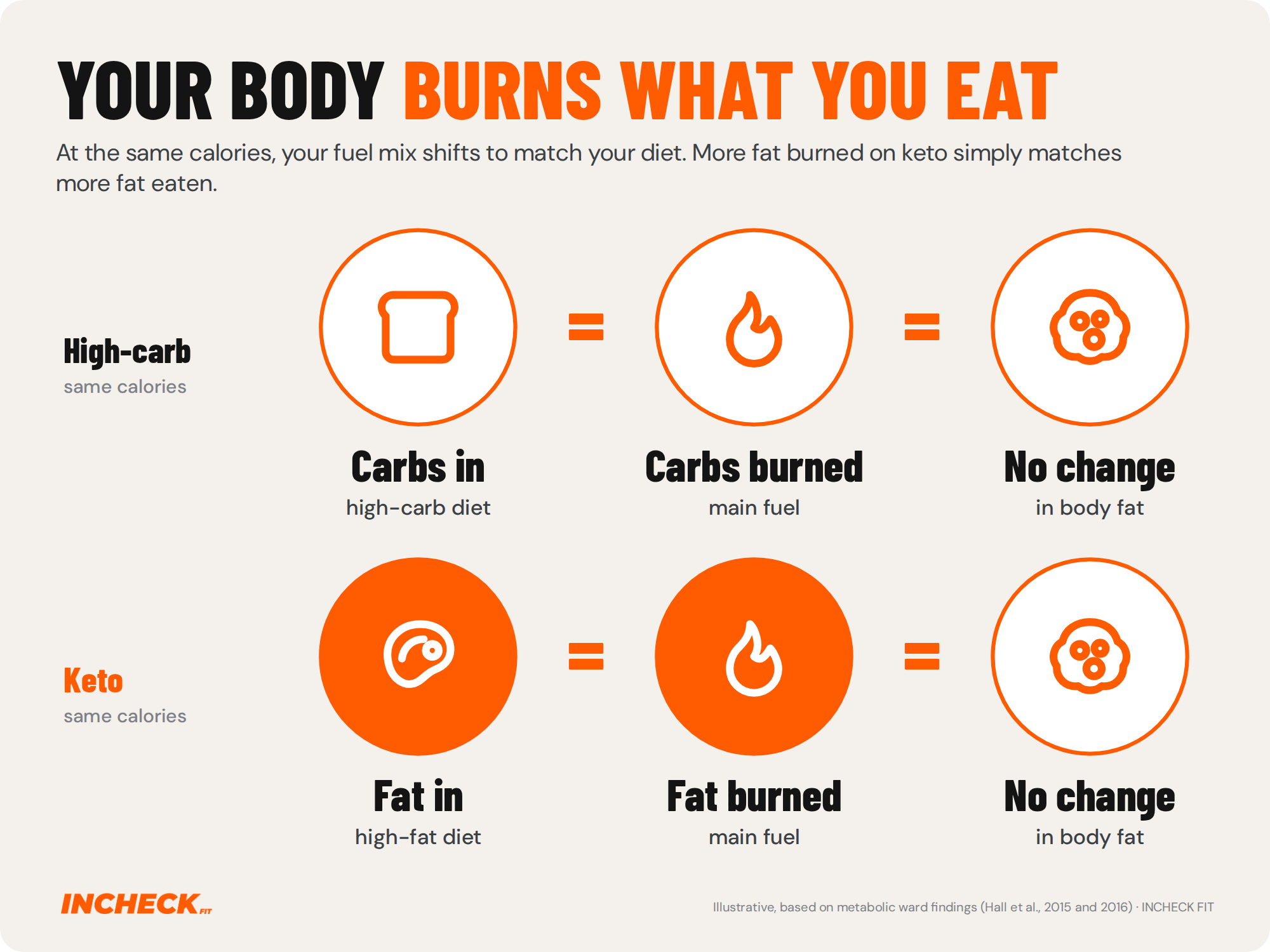
What determines whether stored body fat is reduced is not how much fat you oxidise. It is whether your total energy intake is below your total energy expenditure: a caloric deficit. Keto changes the fuel mix. It does not override the energy equation.
Why Keto Feels Like It Burns More Fat (But Often Does Not)
The experience of keto is genuinely different from a standard diet. The scale drops quickly, hunger softens, and people feel like something metabolically significant is happening. That perception is real. The explanation for it is more mundane.
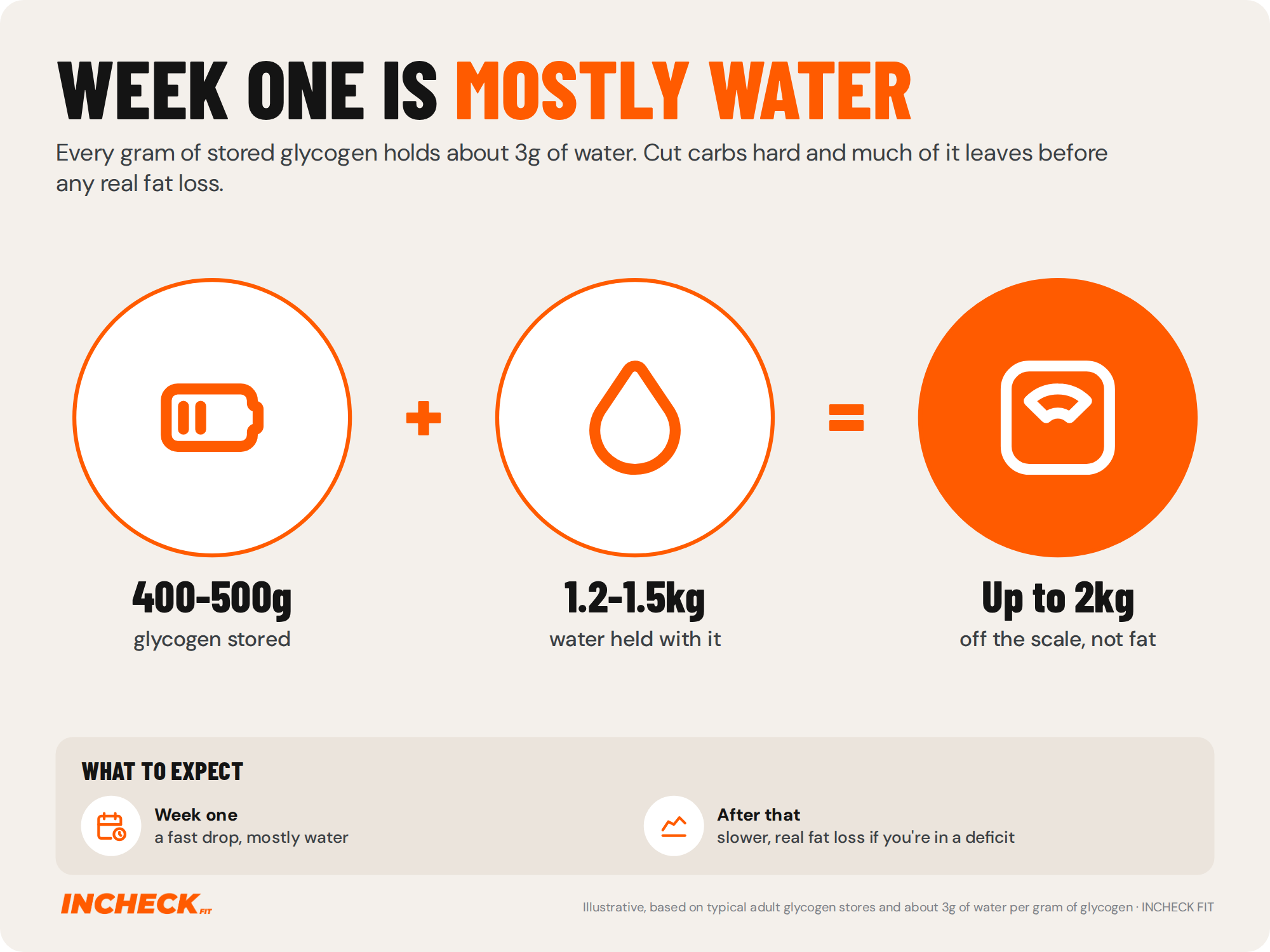
Week One: Water, Not Fat
Every gram of glycogen stored in your muscles and liver is bound to roughly three grams of water. When carbohydrate intake drops sharply, glycogen stores are depleted, and the water attached to them leaves the body. A typical adult stores around 400 to 500 grams of glycogen, which means one to two kilograms, sometimes more, can disappear in the first week of a ketogenic diet before any meaningful fat loss has occurred.
This is well established in exercise physiology. It is also why people regain weight quickly when carbohydrates return, even without overeating. That weight is water. It is not evidence of accelerated fat burning.
Appetite Suppression Creates an Accidental Deficit
A 2015 systematic review in Obesity Reviews found that people on ketogenic diets reported slightly less hunger while in ketosis. The bigger effect was that hunger did not climb the way it usually does during weight loss (Gibson et al., 2015). For some people, that means eating less without tracking anything.
It is not universal. In a 2021 NIH ward study, 20 adults eating as much as they wanted took in about 690 fewer calories a day on a low-fat diet than on a ketogenic one (Hall et al., 2021). Where keto does help, the fat loss is still driven by the deficit. Keto just makes it easier for some people to get there.
What the Research Actually Shows
The strongest evidence on this question comes from metabolic ward studies, where every calorie in and out is carefully measured. These are the gold standard for isolating the effect of diet composition on fat loss.
No Metabolic Advantage: Hall et al. 2016
A 2016 study by Kevin Hall and colleagues at the NIH placed seventeen overweight or obese men in a metabolic ward for two months (Hall et al., 2016). Participants ate a baseline high-carbohydrate diet, then switched to an isocaloric ketogenic diet with identical calories and protein. Energy expenditure rose slightly on keto, by about 57 calories a day in a metabolic chamber (151 a day by doubly labelled water), but the rate of body fat loss actually slowed after the switch compared to the baseline diet. There was no metabolic advantage translating into extra fat loss.
More Fat Loss on the Low-Fat Diet: Hall et al. 2015
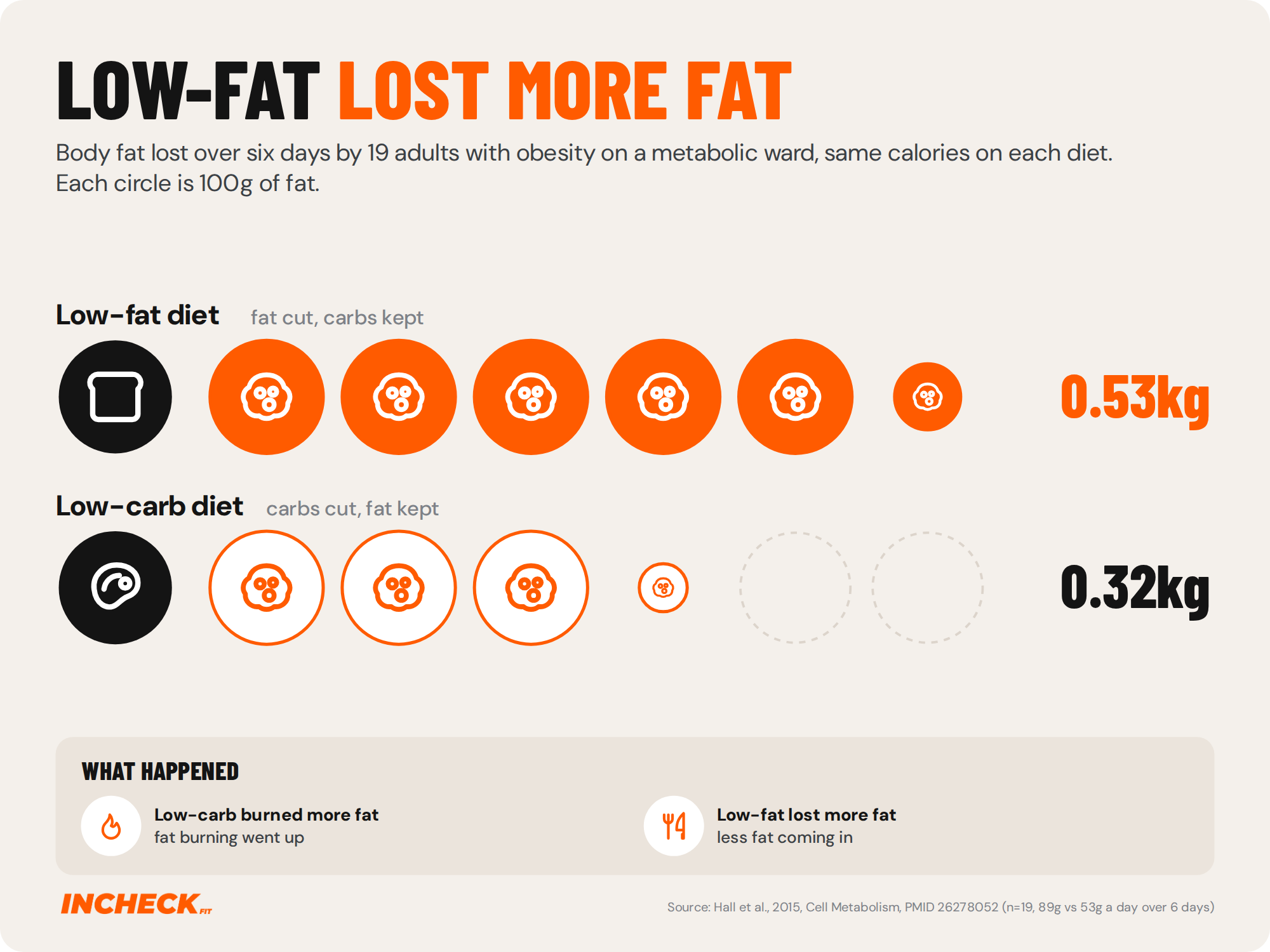
An earlier study from the same research group directly compared calorie-matched low-fat and low-carbohydrate diets in nineteen adults with obesity (Hall et al., 2015). Over six days per condition, body fat loss was modestly greater on the low-fat diet (89 grams per day, about half a kilo over the six days) than on the reduced-carbohydrate diet (53 grams per day, about a third of a kilo). The low-carb arm was not fully ketogenic, but the result runs the opposite way to what the “cut carbs to burn more fat” claim predicts.
No Difference Over 12 Months: Gardner et al. 2018 (DIETFITS)
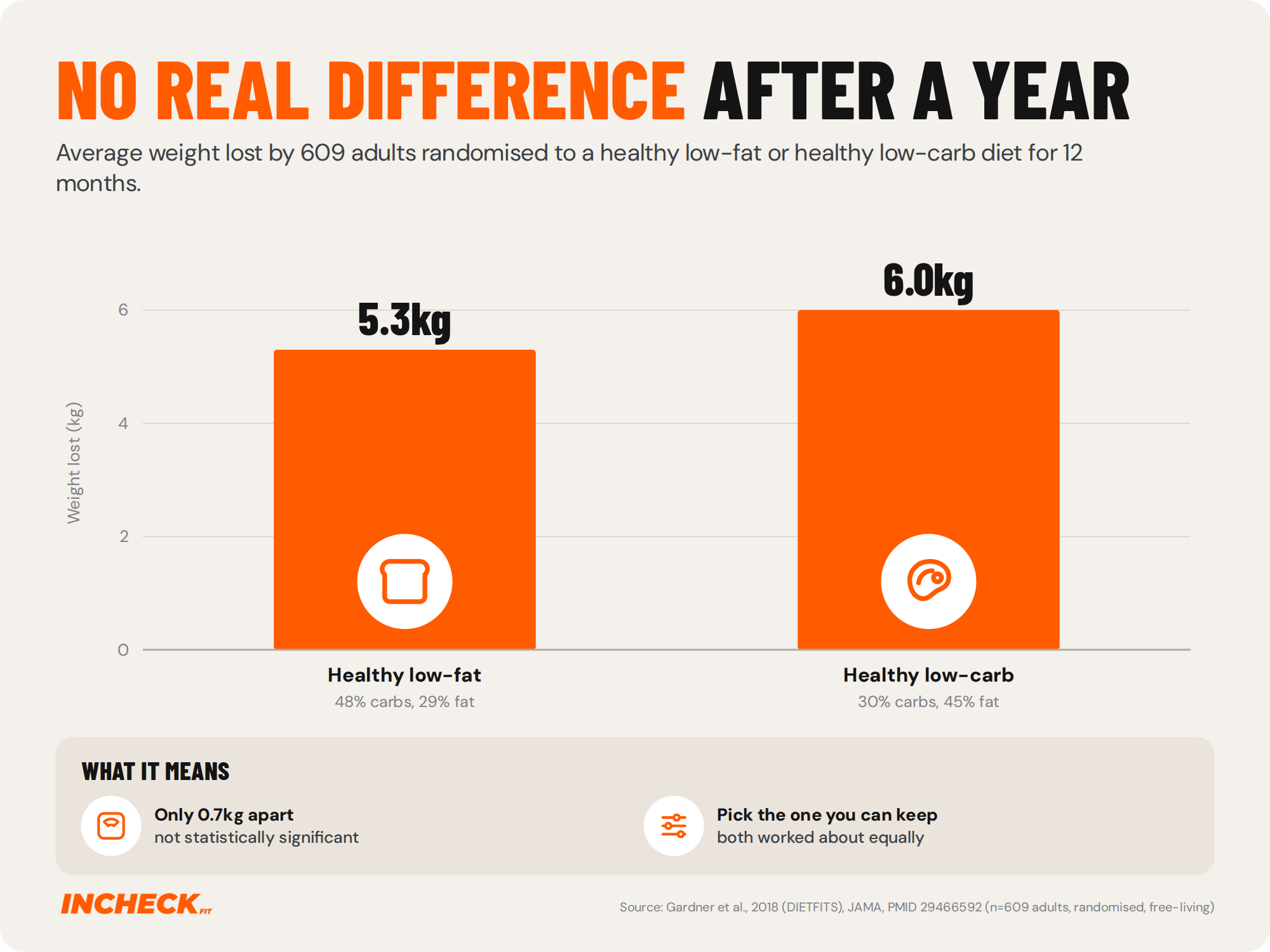
The DIETFITS randomised controlled trial, published in JAMA, followed 609 adults (Gardner et al., 2018) on either a healthy low-fat or healthy low-carbohydrate diet for twelve months. Average weight loss was nearly identical: 5.3 kg on low-fat and 6.0 kg on low-carb. The difference was not statistically significant. Neither genotype nor baseline insulin levels predicted who did better on which diet. Other trials have found that how closely people stick to a diet predicts their weight loss far better than which diet it is (Dansinger et al., 2005).
The Conclusion Is in the Title: Johnston et al. 2006
Johnston and colleagues compared ketogenic and non-ketogenic low-carb diets at matched calories and protein in 20 adults over six weeks (Johnston et al., 2006). The paper’s title: “Ketogenic low-carbohydrate diets have no metabolic advantage over nonketogenic low-carbohydrate diets.” Fat loss did not differ significantly between the groups (if anything, it was lower on the ketogenic diet), and the ketogenic group reported more adverse effects, including lower energy.
Four studies, four different designs, the same direction: cutting carbohydrate does not produce meaningfully more fat loss. A 2017 analysis of 32 controlled feeding studies found that, calorie for calorie, lower-fat diets produced slightly more fat loss, not less (Hall and Guo, 2017).
Gluconeogenesis: The Process That Quietly Closes the Gap
Here is the part most keto content leaves out entirely. The body needs glucose to function, even on a ketogenic diet. Certain tissues, including red blood cells and parts of the brain, have an absolute requirement for glucose and cannot run on ketones.
When carbohydrate intake is very low, the liver manufactures glucose through a process called gluconeogenesis. It does this primarily from amino acids derived from dietary protein, and to a lesser extent from glycerol released during fat breakdown.
This matters for the keto metabolic advantage argument in two important ways.
The energy cost is real but modest. Gluconeogenesis costs energy: in a small study of 10 healthy young men on a carbohydrate-free, high-protein diet, it used up about a third of the energy in the glucose it produced (Veldhorst et al., 2009). That partly explains why ketogenic diets show a small rise in total energy expenditure in some studies, and keto proponents sometimes point to it as a calorie-burning advantage. In the best controlled study, of 17 overweight and obese men, energy expenditure rose by around 60 to 150 calories a day on keto, depending on how it was measured, and fat loss still did not speed up (Hall et al., 2016).
Keto is not a closed fat-burning system. A ketogenic diet does not remove the need for energy balance. If you eat more energy than you burn, the surplus is stored, and on a high-fat diet that surplus is mostly the fat you ate. Restricting carbohydrates reroutes the pathways involved. It does not override the energy equation.
Ketosis and Fat Burning Are Not the Same Thing
One of the most persistent confusions in nutrition is the assumption that being in ketosis means you are burning body fat. These two things are related but not interchangeable.
Ketosis is a metabolic state where the liver produces ketone bodies from fatty acids because glucose availability is low. Those fatty acids come from one of two sources: dietary fat you have consumed, or stored body fat. If you are in ketosis but eating at your maintenance calorie level, you are burning dietary fat, not stored body fat. The scale will not move.
This is precisely why people can stall on keto while remaining “perfectly in ketosis.” Ketosis describes a fuel-switching state. It does not describe a fat-loss state. The actual driver of stored body fat reduction is a sustained caloric deficit. You can be in ketosis and not lose fat. You can be actively losing fat without being in ketosis. Neither one requires the other.
When Keto Can Still Be a Useful Tool
None of this means keto is bad or pointless. It means it does not work through the mechanism most people assume.
Keto can be a genuinely effective approach for people who find a high-fat, high-protein diet more satiating and naturally eat less on it. It has well-established therapeutic applications for certain medical conditions, including drug-resistant epilepsy. And for some people, the removal of carbohydrates from the menu simply eliminates a significant source of excess calories in their diet.
What keto is not is a metabolic shortcut. If you are eating keto and hitting a calorie deficit, you will lose fat. If you are eating keto without a calorie deficit, you will not. The mechanism is the same as every other diet that produces fat loss.
This is why we built INCHECK FIT around energy balance rather than any specific macronutrient approach: the evidence shows the macro ratio matters far less than whether you are in a sustained calorie deficit you can stick to. The app sets your calorie and macro targets from your stats and goal, builds a weekly meal plan to match, and adjusts your targets each week based on your actual progress, without you logging a single meal.
What Actually Drives Fat Loss
Stripped of the marketing, fat loss comes down to a small number of variables that have held up across decades of research.
-
A sustained calorie deficit. Consuming less total energy than your body expends over time. Everything else in nutrition builds around this.
-
Adequate protein to preserve lean mass. Generally around 1.6 grams per kilogram of body weight a day or more for active adults. A 2018 analysis found muscle gains levelled off near that point, though the estimate was uncertain and the true figure could sit anywhere from about 1.0 to 2.2 grams (Morton et al., 2018). Without enough protein, more of the weight you lose comes from muscle rather than fat. Here is how to work out your protein target.
-
A dietary pattern you can follow for months, not just weeks. The diet that produces the best result is the one you are still on in six months. Short-term compliance means little if the approach is unsustainable.
-
Consistency with those three things, week after week. Macro composition matters for satiety, energy, performance, and enjoyment. It does not override the energy equation.
Those three things are what every INCHECK FIT plan is built around: a calorie target set for a sustainable deficit, a protein target to protect muscle, and meals drawn from more than 500 recipes, so the plan is something you actually want to keep eating.
Frequently Asked Questions
-
Does keto make you burn more fat? Yes. Keto increases fat oxidation, meaning your body uses fat as its primary fuel source. But the fat being burned is largely dietary fat you have consumed, not stored body fat. Net body fat reduction still depends on your total energy balance. Higher fat oxidation does not automatically produce more fat loss.
-
What is the difference between fat burning and fat loss? Fat burning (fat oxidation) describes your body’s fuel source, specifically how much fat it is using for energy. Fat loss describes a reduction in stored body fat. You can oxidise a large amount of fat each day and still not lose body fat if you are consuming enough dietary fat to replace it. Actual fat loss requires a caloric deficit: consuming less energy than your body expends.
-
Does keto have a metabolic advantage over other diets? The controlled evidence does not support a meaningful metabolic advantage from ketogenic diets when calories and protein are matched. In a 2015 NIH metabolic ward study of 19 adults with obesity, fat-restricted diets produced modestly more fat loss over six days than carbohydrate-restricted diets at the same calorie intake (Hall et al., 2015), and a 2017 analysis of 32 controlled feeding studies pointed the same way (Hall and Guo, 2017). Gardner et al. (2018) found no significant difference in 12-month weight loss between low-fat and low-carb approaches in 609 adults. Fat loss on keto is driven by caloric deficit, the same as every other effective dietary approach.
-
What is gluconeogenesis, and how does it relate to keto? Gluconeogenesis is the liver’s process of manufacturing glucose from non-carbohydrate sources, primarily amino acids from dietary protein, and glycerol from fat breakdown. On a ketogenic diet, this process is essential because certain tissues require glucose even when carbohydrate intake is near zero. The process is metabolically costly, which contributes to a small rise in energy expenditure on keto, but the effect is modest (around 60 to 150 extra calories a day in a controlled study of 17 men) and has not been shown to speed up fat loss.
-
If keto has no metabolic advantage, why do people lose weight on it? Largely because of spontaneous calorie reduction. Many people find keto reduces their appetite, which leads them to eat fewer calories without tracking. Research is mixed on how reliable this is, and some people eat more on keto, not less. Cutting out a whole food group also narrows food choices, which can make it easier to eat less. The fat loss is real; it is just driven by a caloric deficit, not by a special fat-burning mechanism.
-
Does keto burn belly fat faster than other diets? Not in any way you can count on. Where you lose fat from is mostly determined by genetics and how much fat you lose overall, and there is no strong evidence that keto targets belly fat when calories are matched.
-
Can you lose fat without keto? Yes. Fat loss occurs whenever a sustained caloric deficit is maintained, regardless of macro split. The DIETFITS trial followed over 600 adults for 12 months and found no significant difference in weight loss between healthy low-fat and healthy low-carb approaches. The approach that produces the best result is the one you can sustain consistently. The same rule applies to eating healthy: food quality matters, but it cannot create a deficit on its own.
References
-
Hall KD, Chen KY, Guo J, et al. “Energy expenditure and body composition changes after an isocaloric ketogenic diet in overweight and obese men.” American Journal of Clinical Nutrition. 2016;104(2):324-333. PMID: 27385608. DOI: 10.3945/ajcn.116.133561 [Metabolic ward study, n=17 overweight or obese men, 4 weeks baseline then 4 weeks keto (not randomised). Abstract read on PubMed 25 Sep 2026.]
-
Hall KD, Bemis T, Brychta R, et al. “Calorie for calorie, dietary fat restriction results in more body fat loss than carbohydrate restriction in people with obesity.” Cell Metabolism. 2015;22(3):427-436. PMID: 26278052. DOI: 10.1016/j.cmet.2015.07.021 [Randomised crossover, metabolic ward, n=19 adults with obesity, 6 days per diet. Abstract read on PubMed 25 Sep 2026.]
-
Gardner CD, Trepanowski JF, Del Gobbo LC, et al. “Effect of low-fat vs low-carbohydrate diet on 12-month weight loss in overweight adults and the association with genotype pattern or insulin secretion: the DIETFITS randomized clinical trial.” JAMA. 2018;319(7):667-679. PMID: 29466592. DOI: 10.1001/jama.2018.0245 [Randomised trial, n=609 adults, 12 months, free-living. Abstract read on PubMed 25 Sep 2026.]
-
Johnston CS, Tjonn SL, Swan PD, et al. “Ketogenic low-carbohydrate diets have no metabolic advantage over nonketogenic low-carbohydrate diets.” American Journal of Clinical Nutrition. 2006;83(5):1055-1061. PMID: 16685046. DOI: 10.1093/ajcn/83.5.1055 [Randomised trial, n=20 adults, 6 weeks. Abstract read on PubMed 25 Sep 2026.]
-
Hall KD, Guo J. “Obesity energetics: body weight regulation and the effects of diet composition.” Gastroenterology. 2017;152(7):1718-1727. PMID: 28193517. DOI: 10.1053/j.gastro.2017.01.052 [Review with meta-analysis of 32 controlled feeding studies. Abstract read on PubMed 25 Sep 2026.]
-
Gibson AA, Seimon RV, Lee CMY, et al. “Do ketogenic diets really suppress appetite? A systematic review and meta-analysis.” Obesity Reviews. 2015;16(1):64-76. PMID: 25402637. DOI: 10.1111/obr.12230 [Systematic review and meta-analysis of appetite ratings before and during ketosis. Abstract read on PubMed 25 Sep 2026.]
-
Hall KD, Guo J, Courville AB, et al. “Effect of a plant-based, low-fat diet versus an animal-based, ketogenic diet on ad libitum energy intake.” Nature Medicine. 2021;27(2):344-353. PMID: 33479499. DOI: 10.1038/s41591-020-01209-1 [Randomised crossover, inpatient, n=20 adults, 2 weeks per diet. Abstract read on PubMed 25 Sep 2026.]
-
Veldhorst MA, Westerterp-Plantenga MS, Westerterp KR. “Gluconeogenesis and energy expenditure after a high-protein, carbohydrate-free diet.” American Journal of Clinical Nutrition. 2009;90(3):519-526. PMID: 19640952. DOI: 10.3945/ajcn.2009.27834 [Randomised crossover, n=10 healthy young men, 1.5 days per diet. Abstract read on PubMed 25 Sep 2026.]
-
Dansinger ML, Gleason JA, Griffith JL, Selker HP, Schaefer EJ. “Comparison of the Atkins, Ornish, Weight Watchers, and Zone diets for weight loss and heart disease risk reduction: a randomized trial.” JAMA. 2005;293(1):43-53. PMID: 15632335. DOI: 10.1001/jama.293.1.43 [Randomised trial, n=160 adults, 1 year. Weight loss tracked adherence (r=0.60), not diet type. Abstract read on PubMed 25 Sep 2026.]
-
Morton RW, Murphy KT, McKellar SR, et al. “A systematic review, meta-analysis and meta-regression of the effect of protein supplementation on resistance training-induced gains in muscle mass and strength in healthy adults.” British Journal of Sports Medicine. 2018;52(6):376-384. PMID: 28698222. DOI: 10.1136/bjsports-2017-097608 [Meta-analysis, 49 trials, n=1,863 adults doing resistance training. Verified Sep 2026 via Europe PMC.]
-
Achten J, Gleeson M, Jeukendrup AE. “Determination of the exercise intensity that elicits maximal fat oxidation.” Medicine and Science in Sports and Exercise. 2002;34(1):92-97. PMID: 11782653. DOI: 10.1097/00005768-200201000-00015 [Laboratory study, n=18 moderately trained cyclists. Abstract read on PubMed 25 Sep 2026.]
-
van Loon LJC, Greenhaff PL, Constantin-Teodosiu D, Saris WHM, Wagenmakers AJM. “The effects of increasing exercise intensity on muscle fuel utilisation in humans.” Journal of Physiology. 2001;536(Pt 1):295-304. PMID: 11579177. DOI: 10.1111/j.1469-7793.2001.00295.x [Laboratory study, n=8 trained cyclists. Oxidation rates from Table 2 of the full text (PMC2278845), read 25 Sep 2026, converted to calories.]
Last reviewed: October 2026